Home Blog Page 92

Prepare for Wildfires As Potential Continues

COLLEGE STATION, Texas — As wildfire potential continues across Texas, prepare and keep prevention top of mind.
“Dry conditions will persist into the weekend, continuing this week’s risk for wildfires,” said Jared Karns, Texas A&M Forest Service Fire Chief. “It’s important for Texans to prepare for wildfires, work to prevent them and heed warnings of local officials.”
Ninety percent of wildfires are caused by people and their activities, meaning most are preventable. Help prevent wildfires by being cautious with any outdoor activity that may cause a spark.
  • Debris burning. Debris burning is the number one cause of wildfires in Texas. Always check for and follow local burn bans and avoid burning on hot, dry or windy days.
  • Equipment use. Equipment use is the second leading cause of wildfires. Keep all vehicles in good working order and avoid parking and driving in tall, dry grass. Catalytic converters can spark dry grass.
Prepare your family for wildfire.
  • Create a go kit. Build a kit with people and pet supplies, prescriptions, important papers, personal needs and priceless items.
  • Plan evacuation routes. Identify at least two evacuation routes and pre-load evacuation routes into your vehicle or cell phone.
  • Follow instructions of local officials. Sign up for local alerts and notifications from local emergency response officials.
By the direction of Governor Abbott and the Texas Division of Emergency Management, Texas A&M Forest Service has activated state and local firefighters, support personnel, fire engines, bulldozers, and motor graders; federally contracted firefighting aircraft, including large air tankers, single-engine air tankers for retardant drops, air attack platforms for surveillance and spotting and helicopters with firefighting capability.
Since Jan. 1, 2025, state and local firefighters have responded to 462 wildfires that have burned 9,093 acres statewide.
Learn more about the current wildfire situation and how you can prepare at https://tfsweb.tamu.edu/CurrentSituation/.

Drug-Free All Stars to Kick Off Project Sticker Shock

The Angelina County Drug-Free All-Stars, alongside The Coalition’s Board of Directors and staff, will kick off Project Sticker Shock on Tuesday, March 4th, with a press conference at Brookshire Brothers Gaslight, 1807 W. Frank St., in Lufkin beginning at 10:00 am. The guest speakers will be Reagan McDonald, Drug-Free All-Star and Lufkin High School student; Melissa Crager, Public Relations and Corporate Responsibility Manager for Brookshire Brothers; and a representative from Angelina County Juvenile Probation.

Project Sticker Shock is a community awareness campaign that aims to make adults aware of the dangers of underage drinking and the consequences of providing alcohol to minors. The participating stores are Brookshire Brothers, Tobacco Barn, La Michoacana Meat Market, Big’s convenience stores, Hernandez Grocery, Walgreens on Frank, and Coleman’s convenience store in Zavalla. The Drug-Free All Stars hold this event annually before the Spring Break holiday. Spring Break is one of the deadliest times for alcohol-related accidents involving minors. 

Since 1988, The Coalition has focused on eliminating the use of harmful substances by affecting public policy, laws, attitudes and behaviors, all to foster healthy life-long choices for the local community. For more information about the Drug-Free All Stars, contact Abby Baker at The Coalition at 936-634-9308.

Strengthen Your Relationship With These Financial Tips

(StatePoint) Issues around money can put a strain on any couple. However, financial experts say that a strong relationship can be cultivated with financial habits that prioritize communication and shared values.

To help you and your partner get a handle on your financial health and happiness, CERTIFIED FINANCIAL PLANNER® professionals are sharing their best money tips for couples.

Be open, honest and respectful: Whether discussing debt or other financial commitments, credit scores or shared goals for the future, being transparent with one another is absolutely essential to building trust. At the same time, it’s important that conversations are conducted with respect and empathy. Understanding each other’s financial histories, starting with lessons taught in childhood, can lead to more productive discussions.

Communicate regularly: Having one conversation about money is not enough. Keeping the dialogue open helps ensure you remain on the same page over time. You may find it helpful to schedule a weekly appointment to touch base on issues such as cash flow, savings and goal setting.

Build a shared budget: Collaborating on a budget is a great way to identify your individual and shared financial priorities and can help you avoid spending surprises down the line. A CFP® professional can review your finances and help you select a budgeting strategy that you both can live with. Once in place, consider using budgeting software to seamlessly share updates.

Prepare for rainy days: Too many Americans have zero savings, leaving them unprepared for financial emergencies such as job loss, unexpected home repairs and long-term illness. Give your relationship the gift of a robust emergency fund. This will offer you everyday peace of mind, and help you avoid some stress and heartache in the face of unexpected circumstances.

Make a holistic financial plan: Work together to create an overarching financial plan that helps you meet your short- and long-term financial goals, such as buying a home, saving for your children’s education or preparing for retirement. Specially trained to provide guidance on all aspects of financial planning, including estate planning, retirement planning, investing and insurance, a CFP® professional can take a holistic look at your overall financial picture to help you fine tune your strategy.

For more financial tips and to find a CFP® professional, visit LetsMakeAPlan.org.

For a happy, healthy relationship, keep an open dialogue with your partner about money. Doing so will strengthen your bond, build trust and help you reach your goals

My Five Cents: A Weekly Column from Sen. Robert Nichols

On March 2nd, 1836 The Texas Declaration of Independence was signed at Washington-on-the Brazos. This Sunday will mark 189 years since the Republic of Texas declared itself an independent nation.

Here are five things happening around your state:  

  1. Finance committee hears bill regarding Dementia Prevention Institute

This week the Senate Finance Committee will hear Senate Bill 5 and Senate Joint Resolution 3, both authored by Senator Joan Huffman. The bill and accompanying resolution will create the Dementia Prevention Research Institute of Texas (DPRIT). The institute will enhance and support research into the causes, prevention, and treatment of dementia and related disorders. The bill and resolution would create a $3 billion fund to support and expedite innovation in dementia research over the next 10 years. The institute will award grants to create, attract, and expand research capabilities of eligible institutions of higher education and other public and private entities. DPRIT follows a model created several session ago for the Cancer Prevention and Research Institute of Texas (CPRIT), an incredibly successful model to attract the best and brightest researchers to the state to develop innovative cancer treatments. I am excited to work on legislation to combat this growing issue. 

  1. Teacher pay raises pass Texas Senate

On Wednesday, the Senate unanimously passed Senate Bill 26 authored by Senator Brandon Creighton. SB 26 approves across the board raises for Texas teachers. The bill will help recruit and retain teachers in both rural and urban schools. In rural areas teachers with five or more years experience may receive up to a $10,000 raise. In districts with more than 5,000 students, teachers with five or more years experience may receive up to a $5,500 raise. This bipartisan effort will also expand the Teacher Incentive Allotment, which allows raises to be granted based on student performance. 

  1. Senate bill filed to end courier services at Texas Lottery Commission. 

Senate Bill 28 by Senator Bob Hall was heard in the Senate State Affairs Committee this week. The bill seeks to end Lottery ticket sales over the Internet, including via mobile devices. Existing statute already prohibits the sale of tickets via telephone, but this bill clarifies that includes over the internet. In recent years, the rules at the Lottery Commission were changed to allow for “courier services.” These services allow buyers to order tickets via an app. The third party would then in turn purchase tickets from a ticket retailer and deliver them electronically to the buyer. This bill will implement necessary safety measure to reduce the risk of fraudulent activity connected to the Texas Lottery. The lottery is a sizable source of revenue for our state, and this added safe guard will ensure the ethical operation of the system. In addition, the governor has called on the Texas Rangers to investigate fraudulent activity at the Lottery Commission and with Lottery ticket sales connected to these courier services. 

  1. Bill filed providing affirmative defense for a landowner to disable a drone 

Representative Jeff Leach filed House Bill 2916 this week, which would allow landowners to shoot down unmanned aircraft over their property. The bill provides an affirmative defense for shooting down a drone or unidentified flying object. For the bill to apply, three criteria must be met: the object must have been on property “owned or legally occupied by the person,” it must be shot using a firearm “legally possessed by the person to disable, damage, or destroy an unmanned aircraft that the person did not authorize to be on or over the property,” and that the person has not been “prohibited from discharging the firearm” by the penal code, or policy governing the use of the property. It is a crime to knowingly or recklessly- destroy, damage, or tamper with another person’s tangible property, however under the proposed legislation, if a person can prove the three criteria have been met, it could reduce or void criminal or civil liability. 

  1. Scam texts targeting Texans posing as toll road 

Texas drivers have experienced a surge in fraudulent texts claiming that they have unpaid tolls. The most widely received text, which impersonates the Texas Department of Transportation, states that the driver has unpaid fees and can avoid any late penalties by paying their fee within the next twelve hours. Often, these texts include a link which appears to be to “TxTag” and is signed from the “Toll Roads Team.” TxDOT has reminded customers that they do not send text messages about unpaid tolls. If TxDOT needs to reach a customer, the message will likely be sent from a 22498 number, but any legitimate messages will not be in reference to unpaid bills. TxDOT is working to take down the fraudulent websites impersonating their operation. 

Navigating IT Challenges: Insights from Alec Castleberry

In today’s fast-paced digital world, businesses rely on their IT infrastructure like never before. But as companies grow, so do the challenges of managing technology effectively. From unreliable support to increasing cybersecurity threats, IT obstacles can impact operations, security, and growth. Having worked closely with businesses to optimize their IT strategies, I’ve seen firsthand how addressing these challenges head-on can make all the difference.

The Hidden Costs of Unreliable IT Support

Nothing halts productivity faster than inconsistent IT support. When systems go down, deadlines are missed, customers are left waiting, and revenue suffers. Many businesses don’t realize how much time and money is lost due to frequent IT disruptions.

The Fix: At Castleberry Services, we believe in proactive IT support—monitoring systems 24/7 to identify and resolve issues before they escalate. Reliable, always-on assistance ensures businesses can focus on growth without worrying about unexpected IT failures.

Cybersecurity in the Age of Digital Threats

Cyberattacks are no longer a distant possibility—they are an everyday reality. Whether it’s a small business or a large enterprise, no one is immune. Weak security measures leave companies vulnerable to data breaches, malware attacks, and financial losses.

The Fix: Businesses must invest in strong cybersecurity protocols, from secure network setups to employee awareness training. At Castleberry, we help companies implement multi-layered security solutions that keep sensitive data safe and operations running smoothly.

The Chaos of Multiple IT Vendors

Many companies use a patchwork of IT providers—one for network management, another for security, and another for software solutions. The result? Confusion, inefficiency, and rising costs.

The Fix: A unified IT approach simplifies management and improves efficiency. Castleberry Services integrates all IT solutions under one roof, eliminating the need for multiple vendors and ensuring a seamless technology experience.

The Trap of Rigid IT Contracts

Many businesses feel stuck in long-term IT contracts that don’t evolve with their needs. They either overpay for unnecessary services or struggle with inadequate support.

The Fix: Flexible IT solutions allow businesses to scale without unnecessary expenses. Castleberry offers adaptable service agreements that match real-time needs, ensuring businesses only pay for what they truly require.

The Case for Proactive IT Management

Waiting for IT problems to arise before fixing them is a costly strategy. Preventative maintenance and proactive monitoring are key to avoiding expensive and time-consuming failures.

The Fix: A strategic IT plan that prioritizes monitoring and maintenance prevents downtime and keeps operations running at peak efficiency. Castleberry Services focuses on identifying potential issues before they disrupt business, ensuring continuity and reliability.

Looking Ahead

The digital world isn’t slowing down, and neither are the challenges businesses face when managing IT. By addressing these common pain points with proactive solutions, businesses can ensure they remain competitive and resilient in an ever-evolving landscape.

At Castleberry Services, we’re committed to helping businesses navigate these challenges with expert-driven IT strategies that enhance security, efficiency, and long-term success. If you’re ready to take control of your IT future, let’s talk.

Transformation of Cardiovascular Care in Deep Texas (Angelina County)

0

Join us this Friday, February 28 at 8 AM for our Power Networking Breakfast at The Heart Institute of East Texas!

Location:
310 Gaslight Blvd., Lufkin

Dr. Ravinder Bachireddy will dive into “The Transformation of Cardiovascular Care in Deep East Texas,” sharing groundbreaking advancements that are changing the way we prevent, diagnose, and treat heart disease.

Thank you to our Presenting Sponsor, Angelina College SBDC, and our February Sponsor, The Heart Institute of East Texas.

Angelina College Athletics Weekly Update

0

Hey, sports fans,

We had all six – yes, count ‘em, six – of our teams involved in action this week, from soccer’s spring games to our basketball teams steaming toward the end of their respective regular seasons to our baseball and softball teams trying to swim their way across the diamonds in an effort to get in a few games.  

Here’s a quick rundown of the week’s events, along with what’s coming up next: 

No. 17 Roadrunner Basketball  

If Roadrunner sophomore Chris Carpenter was hoping to make his final year at AC a memorable one, he’s certainly done a great job.

Already with a couple of big-time buzzer-beaters under his belt, Carpenter added another memorable shot to his resume on Wednesday.

Carpenter drained a three-pointer with less than one second remaining in the first overtime period to help the No. 17 Roadrunners hold off Tyler Junior College in a 71-70 thriller at Shands Gymnasium. 

Carpenter finished with 13 points and five assists. Kanaan Holder led AC in scoring with 17 points, with Daemon Ely adding 11 points and eight rebounds. 
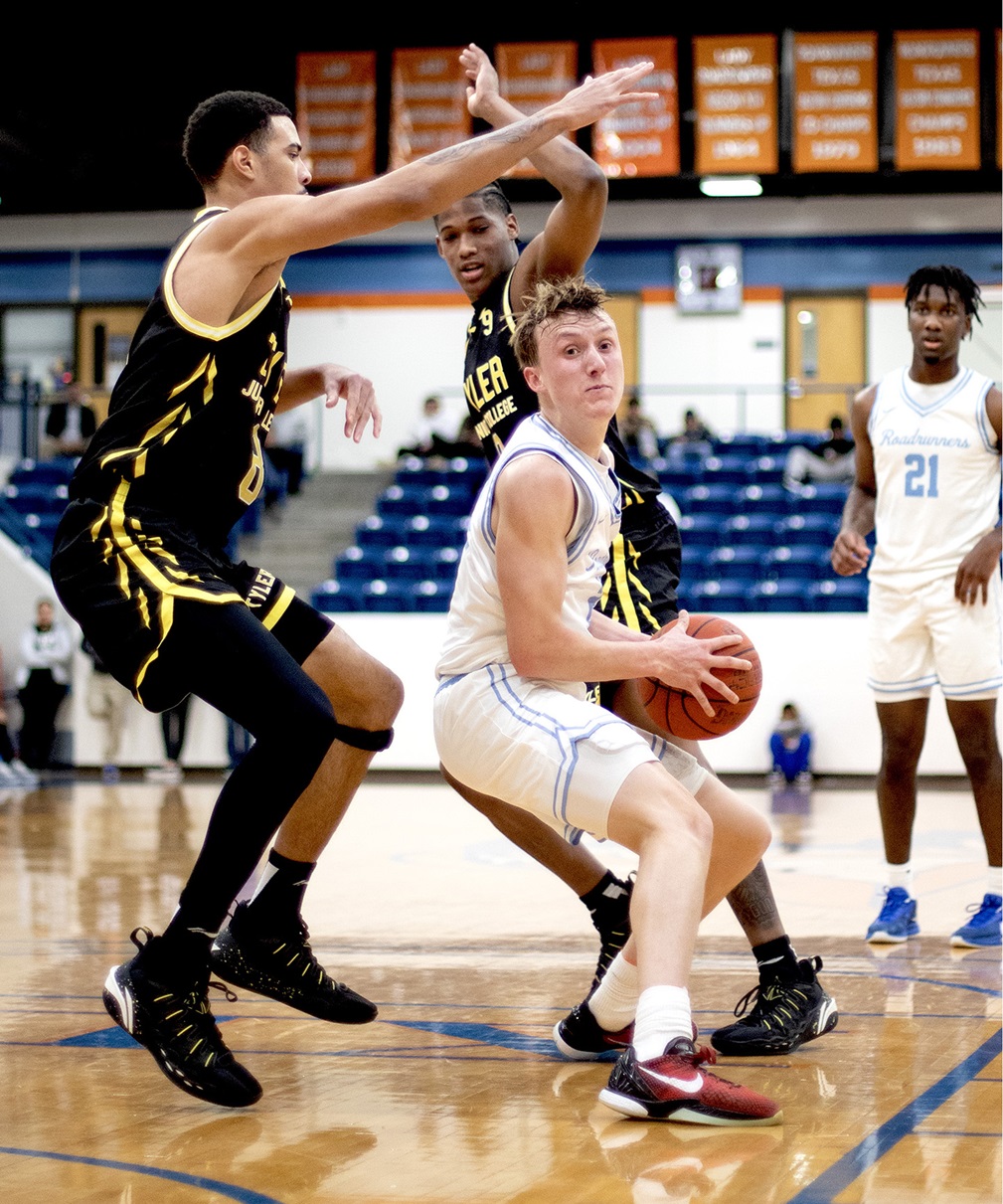
On Saturday in Bossier City, La., the Roadrunners handled the Cavaliers in a key 59-48 win behind 12 points from Holder and 11 points each from Carpenter, Jordan Mathews and Christian Jones. 

With Saturday’s win, the ‘Runners (21-5, 14-4) climb back into second place in the Region XIV standings. AC will travel to Port Arthur on Monday to face Lamar State College-Port Arthur in a game postponed from Jan. 22. Game time is 7 p.m.

On Wednesday (2/26), AC will host Coastal Bend CC at 7:30 p.m. at Shands Gymnasium. Finally, on Saturday, AC will be at Kilgore College to face the Rangers starting at 4 p.m.   


Lady Roadrunner Basketball  

The Lady Roadrunners, still missing key players because of injury (including leading scorer India McMahon) dropped tough one at Paris College on Wednesday, falling to the Lady Dragons by a 61-56 final despite a big night from Lanaijha Johnson.

Johnson led AC with 21 points and nine boards, with Alannah Nerocker adding 16 points and Alecia Rivera-Scott chipping in another 10 points. 

Saturday at No. 15 Trinity Valley CC, the Lady Roadrunners just didn’t have the firepower to keep pace with the Lady Cardinals in a 91-45 loss in Athens. 


The Lady Roadrunners (10-14, 3-8) will host Coastal Bend CC on Wednesday (2/26) in a women’s/men’s home doubleheader starting at 5:30 p.m. AC then will play at Tyler JC at 2 p.m. on Saturday (3/1) at Wagstaff Gymnasium in Tyler. 

AC Baseball Drops Pair to Alvin, Bounces Back with Sweep at Temple

The Roadrunners on Monday hit a brick wall in the form of a solid Alvin College pitching staff, with Alvin sweeping the doubleheader by 8-5 and 5-1 scores at Poland Stadium. 

In the opener, AC got three hits in three at-bats from leadoff hitter Connor Ficarra, who also scored four of his team’s runs in the 8-5 loss. Jacob Tanguma added two hits and a pair of RBI, while Cole Standley, Diesel Gonzalez and Stefano Ramos each drove in a run.

Ficarro drove in AC’s only run in the 5-1 loss in Game 2.

Saturday at Temple College, the ‘Runners posted an impressive bounce-back performance, sweeping the Leopards 10-5 and 7-3 in Temple.  

In the opener, Diesel Gonzalez drove in three runs with a sixth-inning, three-run homer, Cooper Molnes collected three hits in three at-bats and the Roadrunners cruised to a 10-5 win over the Leopards. Starting pitcher Sam Nitzke struck out six hitters over his four innings of work, and relievers Colby Turner and Evan Mendoza teamed up to wrap things up without allowing an earned run between them.

In the nightcap, Stefano Ramos went deep with a two-run blast, while Ashton Wagner and Ryan Lewis added two RBI each in a 7-3 AC win. 

The ‘Runners (7-7) host Navarro College in a Wednesday (2/26) twin bill set for a 1 p.m. start at Poland Stadium. AC will be in Carthage on Saturday (3/1) for a doubleheader set for a 3 p.m. start.   

Lady Roadrunner Softball Swept at Tyler JC

Bad weather all week prevented the Lady Roadrunners from hitting the diamonds anywhere, with games rescheduled for later dates. Not until Saturday were the Lady ‘Runners able to see any action, as the team traveled to Tyler JC for a doubleheader. After dropping the opener 8-7 in heartbreaking fashion, the Lady Roadrunners were shut down 13-0 in five innings in the nightcap. 

In Game 1, Megan Luce and Trinnity Blatz each drove in a pair of runs, and Riley Davila, Katherine Page and River Hulsey each picked up an RBI.  

The Lady Roadrunners (5-11, 0-2) were scheduled to host Trinity Valley CC on Monday (2/24), but those games have been postponed because of rain. (At the time of this writing, the teams were discussing playing here at AC on Friday, 2/28). 

On Wednesday (2/26), AC’s ladies will face the same Lady Cardinals in Athens, with that twin bill set for a 2 p.m. start.

The Lady Roadrunners will end the week with a Sunday (3/1) doubleheader at home against Bossier Parish CC. First pitch for Game 1 is set for 1 p.m. 

Soccer Teams Open Spring Season

The Lady Roadrunners’ soccer team kicked off its Spring 2025 season against Louisiana State University-Shreveport this past Saturday at the Larry Phillips Family Sports Complex. 

The Lady Roadrunners’ next spring match will take place at home on Friday, March 21 against McNeese State University. The match kicks off at 6 p.m.  

The Roadrunner men will see their first action of the spring on Tuesday (2/25) in Houston as AC faces Houston Christian University at 7 p.m.

The men’s squad will host just one match for the spring season: An April 5 match against the University of Texas-Tyler set for a 2 p.m. kickoff.  

Region XIV Basketball Tournament Information

The Region XIV Conference Basketball Tournament will take place at Lee College in Baytown, Texas this year, with men’s and women’s teams vying for berths in their respective national tournaments.

The 2025 version of the tourney is scheduled to tip off its opening round on Tuesday, March 11 and will conclude with the championship games on Saturday, March 15. 

Final seedings for the tournament won’t be announced until after the regular-season finales on Wednesday, March 5. If the season ended today, the Roadrunner men would enter the tourney as the No. 2 seed in Region XIV; AC’s guys would earn a first-round bye and play their first game on Thursday, March 14.

The Lady ‘Runners would enter the tourney as the No. 6 seed, with their opening game taking place on Wednesday, March 13. 

Once the tournament link is updated with correct information, fans will be able to find it here in the next couple of AC Athletics Weekly Updates.  

Soccer Teams Hosting ID Camps in March

Both Angelina College soccer teams will be hosting ID camps in March as the programs continue to identify new talent. 

The Roadrunner men will host their ID Camp from 9 a.m. until 12 p.m. on Saturday, March 1 at the AC Soccer Complex on the AC campus. The camp is for prospective players in 9th through 12th grades. Cost for the camp is $60 if players register by Feb. 21. After Feb. 21, the cost will be $75.

The Lady Roadrunners’ ID camp takes place from 10 a.m. until 1 p.m. on Saturday, March 8 at the AC Soccer Complex on the AC campus. The camp is for prospective players in 9th through 12th grades. Cost for the camp is $30 if players register by Feb. 21. After Feb. 21, the cost will be $50.

Here’s the link for registration and other information for both Soccer ID camps:

https://www.eventbrite.com/cc/mens-soccer-camp-collection-3998183 

AC’s Camp Roadrunner Sessions Set for Summer 2025

Over the past few years, Camp Roadrunner has become a “gotta do” event for youngsters throughout East Texas, with the recreational and youth sports camps drawing bigger crowds every summer. 

To view the available sports camps and locate the links for registration, visit https://www.angelina.edu/camproadrunner/ and look for each specific sport. 

Following are the dates for each Youth Sports Camp:

Baseball: June 2-5

Soccer: June 9-12; July 7-10

Basketball: June 9-12

Softball: June 9-12

Live Streaming Reminder: 

All AC Athletics regular-season home games will be live streamed on TSBN Sports (a free streaming service for fans), with most of the conference road games also available for streaming. (This does not include baseball and softball fall games, as those are not considered official games.)

Once TSBN posts its schedules, AC fans simply need to visit the AC Athletics web site, look at the scrolling schedule in the middle of the page and click the blue “Video” link. 

TSBN also offers an app great for smart phones, devices and smart TVs. (You’ve GOT to see those matches and games on the big screen.)

Reminder II: Admission to ALL Angelina College Athletics sporting events is free, as is the TSBN live streaming. Any other links offering streaming are scams.  

Reminder III: For the most current schedule updates (especially for potential weather issues) visit the official Angelina College Athletics website (angelinaathletics.com). Fans can also receive updates on the AC Athletics Facebook, X (formerly known as Twitter), and Instagram pages. 


Upcoming schedules:

Monday, Feb. 24, 2025:

Lady Roadrunner Softball vs. Trinity Valley CC, DH starting at 1 p.m. at the Larry Phillips Family Sports Complex on the AC campus. 

No. 17 Roadrunner Basketball at Lamar State College-Port Arthur, 7 p.m. in Port Arthur. (Game is a reschedule from 1/22/2025). 

Tuesday, Feb. 25, 2025:

Roadrunner Men’s Soccer Spring Match at Houston Christian University, 7 p.m. in Houston. 

Wednesday, Feb. 26, 2025:

Roadrunner Baseball vs. Navarro College, DH starting at 1 p.m. at Poland Stadium on the AC campus. 

Lady Roadrunner Softball at Trinity Valley CC, DH starting at 1 p.m. in Athens, TX.  

Lady Roadrunner Basketball vs. Coastal Bend CC, 5:30 p.m. at Shands Gymnasium on the AC campus. 

No. 17 Roadrunner Basketball vs. Coastal Bend CC, 7 p.m. at Shands Gymnasium. 

Saturday, March 1, 2025:

Roadrunner Baseball at Panola College, DH starting at 3 p.m. in Carthage, TX. 

Lady Roadrunner Basketball at Tyler JC, 2 p.m. in Tyler, TX. 

No. 17 Roadrunner Basketball at Kilgore College, 4 p.m. in Kilgore, TX.

Sunday, March 2, 2025:

Lady Roadrunner Softball vs. Bossier Parish CC, DH starting at 1 p.m., Larry Phillips Family Sports Complex on the AC campus.  

For any other information, contact Sports Information Director Gary Stallard at gstallard@angelina.edu

We’ll see you at the games.

Gary Stallard
Email: gstallard@angelina.edu.
Phone: (936) 465-4614

Deep East Texas Students Attend Advocacy Day

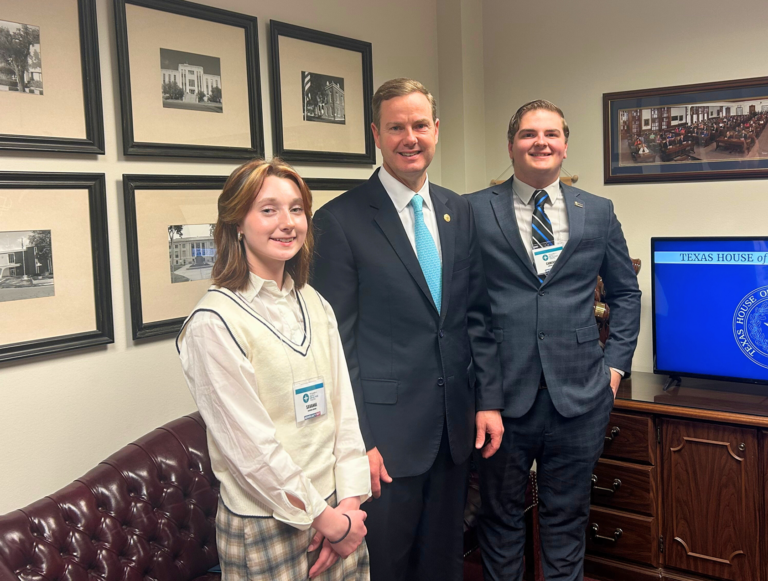
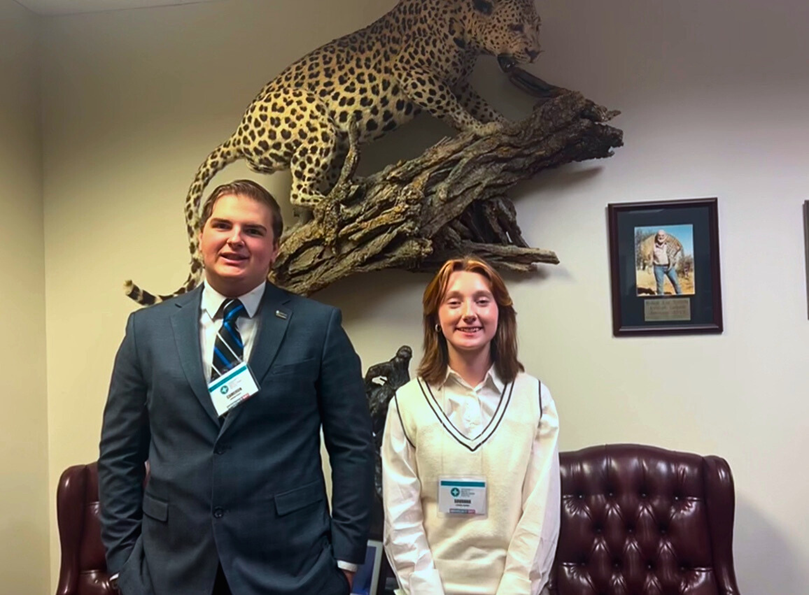
Two Angelina County youth serving on the Youth Leadership Council for Texans for Safe & Drug-Free Youth recently attended Advocacy Day in Austin. Texans for Safe & Drug-Free Youth is the statewide coalition focused on alcohol, tobacco and marijuana prevention for youth, and its Youth Leadership Council members work closely with local coalitions to create community change for youth prevention. Cameron Headly, Central High School, and Savanna Soverns, Pineywoods Community Academy, received information on a range of topics specific to youth prevention: restricting alcohol access, cannabis derived products, and tobacco prevention policies. Texans for Safe & Drug-Free Youth trained on how to talk to elected officials regarding these topics and helped the youth role-play different scenarios. In the afternoon, the students went to the Texas Capitol and met with Representative Trent Ashby and the staff of Senator Robert Nichols. The students shared what they learned about the dangers of substance use by youth, prevention measures to implement to reduce access, and ways to prevent youth tobacco use, including additional funding for prevention. Thank you to Representative Ashby and Senator Nichols’ staff for meeting with the Youth Leadership Council members and listening to the issues that youth in our community face regarding tobacco and alcohol. 


Since 1988, The Coalition has focused on eliminating the use of harmful substances by affecting public policy, laws, attitudes, and behaviors, all to foster healthy life-long choices for the local community. For more information on the dangers of youth substance use or the Youth Leadership Council program, contact Abby Baker at The Coalition at 936-634-9308.

Answering the Call: Volunteer Fire Departments Keep Rural Communities Safe

0

When emergencies happen in our small towns, it’s often our neighbors who show up to help. Volunteer firefighters drop whatever they’re doing – dinner with family, sleep, or work – to rush toward danger when everyone else is running away. These everyday heroes keep our rural communities safe without the big budgets of city fire departments.

Hearts of Service

The men and women who volunteer at our local fire stations come from all walks of life. You might not realize that your child’s teacher, the mechanic who fixed your car, or the cashier at the grocery store might be the same person who shows up in turnout gear when there’s an emergency.

Many volunteers come from families where serving has become a tradition, with parents, children, and even grandchildren all wearing the same department patch. Others joined after firefighters helped them during a tough time, or simply saw a way they could make their hometown safer.

More Than Just Firefighting

Despite what their name suggests, our volunteer fire departments do much more than just put out fires. They’re usually first on the scene for car accidents, medical emergencies, storm damage, and search operations when someone goes missing.

In the most remote parts of our region, these volunteers might arrive 15 or 20 minutes before an ambulance can get there. Those minutes can save lives when someone is badly hurt or having a heart attack.

Training and Equipment Challenges

Running a fire department isn’t cheap, but many volunteer stations operate on shoestring budgets. While city departments get steady tax money, our rural departments often piece together funding from fish fries, barbecues, grants, and donations.

The training isn’t easy either. Volunteers spend evenings and weekends learning firefighting skills, emergency medical care, hazardous materials handling, and more. They give up their free time to make sure they’re ready when we need them most.

Community Support Systems

The relationship between fire departments and our towns works both ways. When departments hold fundraisers, they become community events where everyone catches up while supporting a good cause.

Fire departments give back too. They teach kids about fire safety at schools, help elderly neighbors install smoke detectors, and join in parades and festivals. They’re woven into the fabric of our small towns in ways that go far beyond emergencies.

Finding New Volunteers

Getting new volunteers isn’t as easy as it used to be. Busier work schedules, longer commutes, and family needs make it hard for people to commit the time needed for training and responding to calls.

Departments are getting creative to solve this problem. Some offer more flexible training options, create special roles for people who can help but can’t fight fires, and start junior programs to get teenagers interested in serving when they’re old enough.

Helping Each Other Out

When big emergencies happen, one department can’t handle everything alone. That’s why our local departments have agreements to help each other out when needed.

This teamwork crosses county lines and town boundaries. We saw this in action during recent wildfires when volunteers from departments across the region worked side by side with state forestry crews and federal firefighters to protect homes and forests.

The Personal Cost

Being a volunteer firefighter means making sacrifices that most people don’t see. It’s missing family dinners when the pager goes off, driving your own vehicle to the station at 2 a.m., and sometimes witnessing terrible things that are hard to forget.

The toll can be especially heavy in small towns where volunteers often know the people they’re helping. After tough calls involving friends or neighbors, departments are learning how important it is to take care of their members’ mental health too.

Looking Forward

As our rural communities change, fire departments are changing too. Some are starting to have a few paid staff working alongside volunteers, especially during weekdays when many volunteers are at their regular jobs.

Better technology is helping too. Improved communications, safer gear, and better training tools are making departments more effective, even with limited resources.

What hasn’t changed is the spirit behind it all. In a world where community connections sometimes feel weaker, volunteer fire departments show us what it means to truly be neighbors – showing up for each other not because it’s easy, but because it matters.

Mitigating The Impacts of Invasive Species in Texas

COLLEGE STATION, Texas – Invasive species cause many negative impacts to the Texas landscape, from the displacement of native trees to potentially killing entire species. Because of their widespread impact, Texas A&M Forest Service takes great lengths to help mitigate their impacts and is highlighting those efforts during National Invasive Species Awareness Week.

Invasive species have two main characteristics: they are non-native to an ecosystem and their introduction is likely to cause harm to the economy, environment or human health. Non-native species are those that do not naturally originate in the area or region where they are found.

“Human activity is often responsible for introducing non-native and invasive species into new ecosystems,” said Demian Gomez, Texas A&M Forest Service Regional Forest Health Coordinator. “This includes planting ornamental trees and plants or accidentally transporting insects in wood packaging material, firewood or other goods.”

Invasive species are dominant and grow well in non-native environments because they lack natural competitors, predators and diseases that normally regulate their populations in their natural environment.

Texas A&M Forest Service works to mitigate the spread and impacts of invasive species through proactive forest health management strategies. The agency also partners with other research organizations to track the spread of invasive pests, diseases and tree species.

Invasive species currently posing a significant risk to Texas include:

Emerald ash borer

Native to eastern Asia, the emerald ash borer (EAB) is a destructive, invasive wood-boring pest that has killed millions of ash trees in the U.S. and Texas. EAB was first detected in the U.S. in 2002 and was first reported in Texas in Harrison County in 2016. Since then, EAB has been detected in 27 Texas counties.

Adult EAB lay eggs in the bark of ash trees in the spring and early summer and the larvae burrow into the bark. The larvae feed on the phloem and cambium, disrupting the flow of nutrients within the tree leading to its death. EAB emerge from the tree as adults, leaving D-shaped holes in the bark.

EAB are easily spread long distances by human activity, especially by the transportation of firewood. They can also travel in unprocessed ash logs, ash nursery stock and other ash commodities.

Texas A&M Forest Service works with communities to develop, communicate and implement local EAB preparedness plans. And while the agency assists with planning, trapping and monitoring, the Texas Department of Agriculture is ultimately responsible for EAB management and coordination in Texas.

Saltcedar

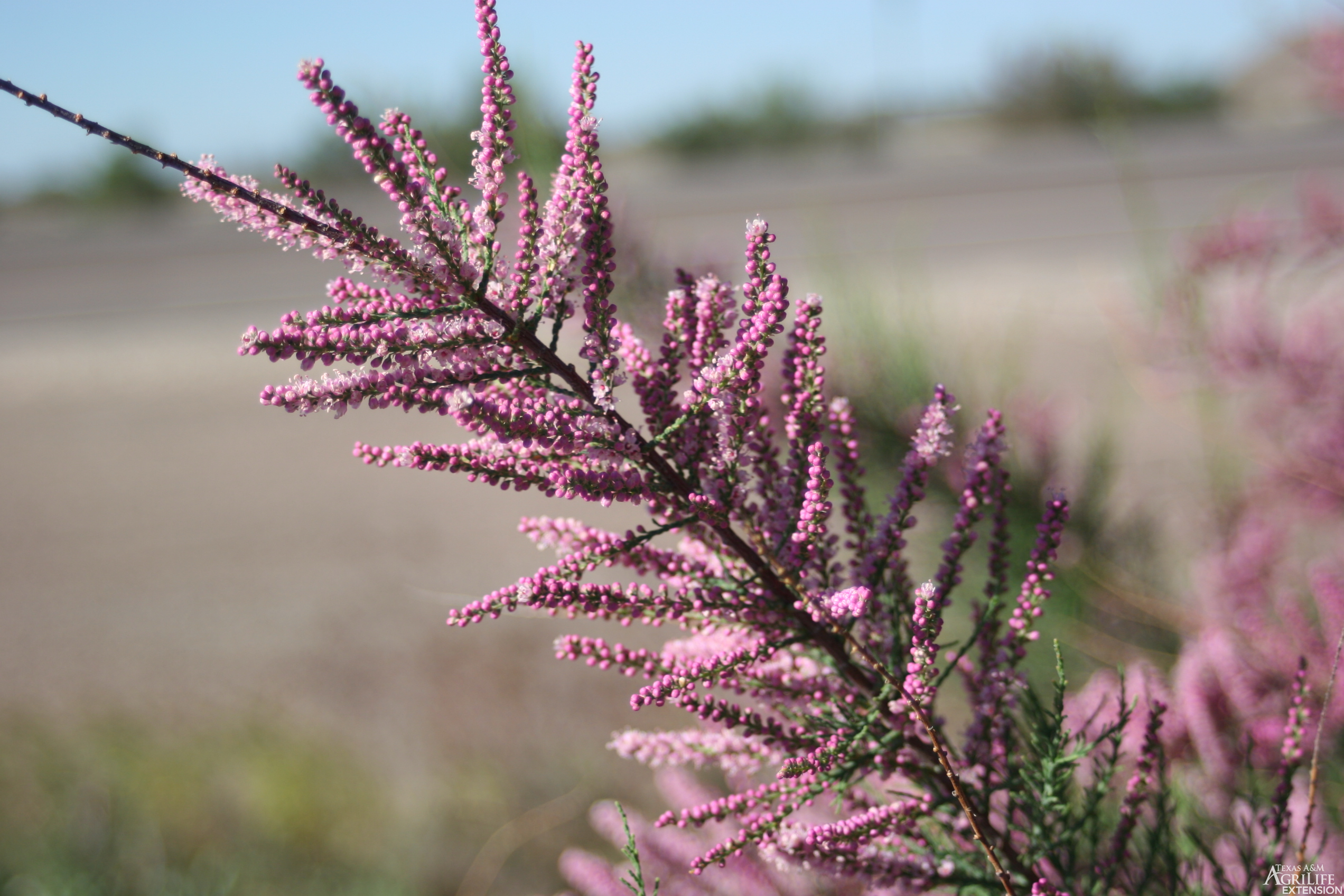
Saltcedar trees are dominating wildlands and ranches, especially in the Texas panhandle, exacerbated by the loss of cottonwood and willow trees to wildfires. They were first introduced in the U.S. as an ornamental tree in the 1800s but escaped cultivation in the 1870s.

Saltcedars are aggressive invasive trees that can consume nearly 200 gallons in a day and their leaves and stems secrete high concentrations of salt into the ground around them. These factors diminish nutrients for native species. Additionally, saltcedars lack desirable protein for foraging wildlife.

Saltcedars are highly resistant to control, including mechanical management. The best removal method is spraying imazapyr or imazapyr in addition to glyphosate onto the tree.

Brazilian peppertree

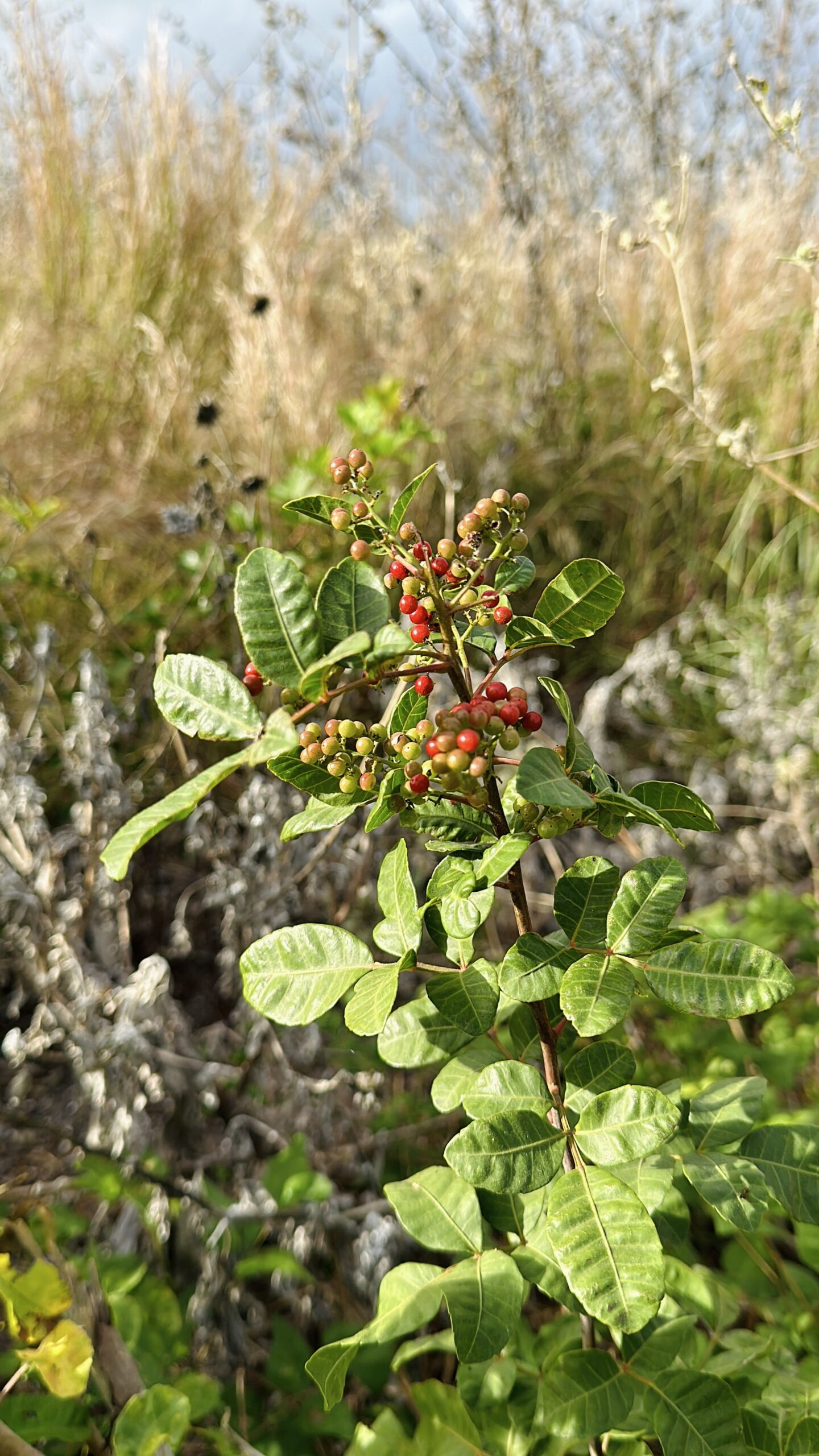
Brazilian peppertree has invaded thousands of acres in coastal habitats since its introduction to Texas in the 1950s. This invasion has caused the shading and killing of native vegetation as well as allergic reactions in some people.

Since 2014, Texas A&M Forest Service has worked with the Texas Gulf Region Cooperative Weed Management Area in Port Aransas to address Brazilian peppertree in the region through eradication and education.

The agency has also been collaborating on a project led by the US Army Engineer Research and Development Center to reduce the impacts of Brazilian peppertree in the Texas Gulf Coast since 2023. The study aims to integrate tiny insects called thrips, referred to as a biocontrol, with ongoing mechanical and herbicide management of the Brazilian peppertree.

Researchers will release new insects and monitor the trees over two years to evaluate the impacts. The U.S. Forest Service provided funding for the project.

Laurel wilt and the red bay ambrosia beetle

Laurel wilt is a vascular fungal pathogen spread by the red ambrosia beetle. The pathogen was first reported in Texas in 2015 and has spread eastward, killing more than half a billion trees in the Lauraceae family. This loss has severely impacted redbays, sassafras and the avocado industry in the southeastern U.S.

This vascular fungal pathogen, transported and cultivated by the beetle to be used as a food source for larvae, can kill trees in less than a month.

Texas A&M Forest Service is working with public and private partners to study the spread and distribution of the disease/insect complex.

Silktree/Mimosa

Mimosa trees are widely used in landscaping due to their fragrant purple flowers and silky petals that bloom in the spring. This Asian native tree was introduced to Texas in 1745. Mimosas adapt to a wide variety of soils, and its seed coat is impermeable, allowing years-long dormancy.

Because of their large spanning canopy, mimosa trees can severely reduce sunlight and nutrients for native species.

Mimosa trees resprout with vigor when trimmed or wounded. Mimosas should be cut down to the stump, and then immediately thoroughly sprayed with herbicides to ensure the tree is killed down to the roots. Larger mimosa trees can be injected with Imazapyr or Triclopyr herbicides as a safer alternative to cutting the tree down.

Since invasive species are often introduced by human activity, Texas A&M Forest Service recommends mindful tree planting and activities. Moving firewood can be a culprit in transporting diseases, so it should be burned near where it is purchased or cut down.

Additionally, landowners can help prevent the spread of these invasive tree species and diseases by diversifying the native tree species on their land, creating a naturally competitive ecosystem. Learn more about planting the right tree in the right place: https://texastreeplanting.tamu.edu/.