Home Blog Page 3

Funding Available Through Wildfire Mitigation Grants for Texas Landowners

0

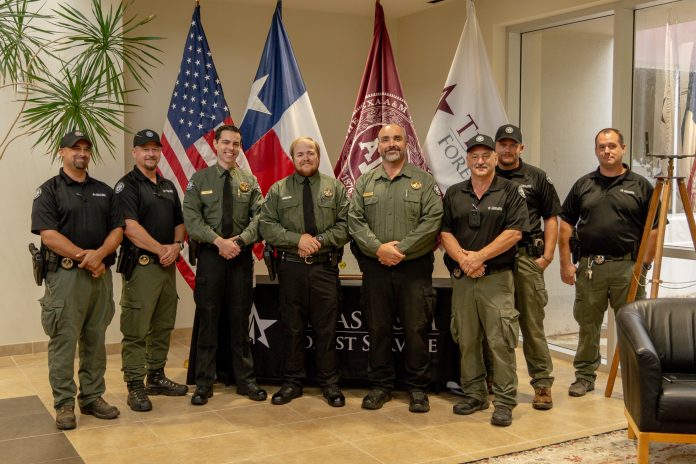
COLLEGE STATION, Texas – Applications are open for Texas A&M Forest Service’s Mechanical Fuel Reduction and Prescribed Fire grants, offering financial support to private landowners and municipalities taking action to reduce wildfire risk.

Applications will be accepted through July 14.

The reimbursement program supports projects that reduce hazardous vegetation and create defensible space around homes and infrastructure.

“Reducing hazardous, dense vegetation on private property plays an important role in protecting communities from wildfire,” said Victoria Wenkman, Texas A&M Forest Service Community Resilience Program Specialist.

Mechanical Fuel Reduction Grant

Landowners and municipalities in 39 Central Texas counties are eligible for the Mechanical Fuel Reduction grant. The grant aims to reduce the risk of home loss to wildfire in Central Texas by using fuel reduction practices including hand-cut and mulching treatments.

Eligible applicants can receive up to $750 per acre for hand-cutting treatments, up to $2,000 per acre for heavy equipment treatment and up to $1,500 for a combination of these treatments.

Prescribed Fire Grants

Several grant opportunities are available for private landowners and municipalities to help implement prescribed burning to reduce hazardous fuel loads and protect communities across the state.

Prescribed burning is a land management tool used to reduce potential fuel for wildfires and help promote ecosystem restoration. Reimbursement rates for prescribed fire grants range from $22.50 to $30 per acre. All require the use of a certified and insured prescribed burn manager.

A webinar covering the grants, application process and more will be hosted on June 2. Register here: https://events.teams.microsoft.com/event/eb5eb3b8-e6de-4fb9-a08a-96432cbfb609@2c2bb68d-f234-4baa-a640-ede7b35d9620.

For additional information about the Mechanical Fuel Reduction grant, visit   https://tfsweb.tamu.edu/grants-financial-assistance/landowner-grants/fire-mitigation-grants/

For additional information about the Prescribed Fire grants, visit http://tfsweb.tamu.edu/grants-financial-assistance/landowner-grants/prescribed-fire-grants/.

______________________________________________________________________________________

Texas A&M Forest Service Contacts:
Mechanical Fuels Grant Program, mfrgrant@tfs.tamu.edu
Prescribed Fire Grant Program, rxfiregrant@tfs.tamu.edu
Communications Office, 979-458-6606, newsmedia@tfs.tamu.edu

Alive After Five hosted by East Texas Center for Metabolic Wellness (Nacogdoches County)

0

June 25 @ 5:30 pm 7:00 pm

Join us for an evening of professional networking, community connection, and conversation at this month’s Alive After Five, hosted by East Texas Center for Metabolic Wellness.

Recently opened in East Texas, our center is dedicated to improving the lives of individuals living with diabetes and other chronic illnesses through an innovative, patented treatment approach designed to help the body properly use insulin again.  Our medical staff will be available to answer questions about our treatment program.

Attendance is free. We welcome community members, business leaders, and healthcare professionals to join us for a fun evening of networking, education, and new connections.  If you or someone you know is living with diabetes, we encourage you to invite your physician or healthcare provider to attend with you to learn more about our treatment options and how they may fit into your care journey.

Catering provided by: Merci’s World Cuisine 
Drinks provided by: R&K Distributers

Audience participation games

Door prizes and giveaways
Chamber Member Cash Giveaway – now at $1,000 

1220 North Street, Ste 100
Nacogdoches, Texas, Texas United States
+ Google Map

Ribbon Cutting for Austin Bank (Nacogdoches County)

0

June 4 @ 4:00 pm 6:00 pm

Please join us as we celebrate 125 years of Austin Bank with a special Anniversary Celebration and Customer Appreciation event and Ribbon Cutting!

We’re excited to honor this incredible milestone with our community and invite you to come be part of the celebration. The ribbon cutting will take place at 4:00 PM, and the afternoon will be filled with live entertainment from Danny Merrell, along with delicious appetizers from The Rusty Spur, beverages from R&K Distributors, and great food from the Reed’s Fish & More food truck.

This is a wonderful opportunity to celebrate Austin Bank’s 125-year legacy and the relationships they’ve built in our community over the years. We hope you’ll come out, enjoy the evening, and help us celebrate this exciting occasion. You won’t want to miss it!

4th of July Parade (Houston County)

0

June 4 @ 7:00 pm 10:00 pm

The City of Crockett and the Crockett Area Chamber invite you to join us for this year’s parade at the Freedom Over Crockett 250th Independence Day! Get ready for a hometown favorite—the Fourth of July Parade is back! 

This year’s parade will feature an exciting mix of cars, equestrian entries, classic cars, colorful floats, and walking groups as we celebrate Independence Day together in true community spirit.

Celebrate Independence Day with us and enjoy an evening filled with hometown pride and patriotic fun.

Check out the following link for more information on the event:
https://www.facebook.com/events/1257868212548390

Head over to the following link to register for the parade:
https://www.crockettareachamber.org/…/freedom-over…

We look forward to seeing you there!

Women’s Networking Luncheon (Angelina County)

0

June 9 @ 11:30 am 1:00 pm

Join us on Tuesday, June 9, for our next Women’s Networking Luncheon presented by Southside Bank!

We’re excited to welcome Jennifer Bristol, author of Wild Women for Good: Stories of Conservation in Texas, who will share about the women who stepped forward to protect the people, places, and natural heritage of Texas. Her stories highlight courage, leadership, resilience, and the impact women can make in their communities.

Come connect with fellow women from across our community, enjoy lunch together, and leave encouraged and inspired.

Register today at bit.ly/WNL-0626

Angelina College’s Wilkie Named 1st Team All-Conference

0

Freshman Utility Player Filled Several Roles for AC

Angelina College Softball’s Eastyn Wilkie earned 1st Team All-Conference honors as a utility player for the Lady Roadrunners. The versatile Wilkie played several positions throughout the season. (Gary Stallard photo for AC Athletics)

Angelina College Softball’s Eastyn Wilkie earned 1st Team All-Conference honors following her freshman campaign in 2026.

The versatile Wilkie, from Cypress Woods High School in Cypress, Texas, played several positions for the Lady Roadrunners, including infield and outfield positions. Wilkie batted .292 for the season, scoring 25 runs while driving in another six. Wilkie finished with nine stolen bases as well, while posting a .439 on-base percentage in conference play.

Wilkie, who is majoring in Education, is the daughter of Brianna and Joe Wilkie of Cypress. 

The email address for AC’s Sports Information Director is gstallard@angelina.edu

Kids Talk About God by Carey Kinsolving and Friends

0

What Can We Learn from the Crucified Body of Jesus?

“If someone poked me with a spear, I’d be mad,” says Jake, 8. “Jesus just let them do it. That’s amazing.”

Jake is right. What happened to Jesus’ body after he died on the cross reveals not just his suffering, but the depth of his love and the truth of who he is. In John 19:31–37, we read how Roman soldiers came to break the legs of the crucified men so they would die faster. But when they came to Jesus, they saw he was already dead. So instead, one soldier pierced his side with a spear.

The request to break their legs came from the Jewish religious leaders. They didn’t want the crucified bodies left on the cross during Passover, so they asked Pilate to speed up their deaths. Their cruelty wasn’t just physical; it was spiritual blindness. In trying to protect their religious holiday, they were killing the very one the holiday pointed to.

“Jesus was already dead because he chose to give up his life,” says Clara, 10. “He was in control the whole time.”

When the soldier pierced Jesus’ side, blood and water flowed out. This wasn’t just a random event. It showed that Jesus was really dead, not just passed out or pretending. Some doctors say the blood and water could be signs that Jesus died from a broken heart, which is a real physical event caused by intense emotional and physical stress.

“When Jesus’ side was pierced, it showed that God’s promises were coming true,” says Leo, 10.

John tells us that all of this happened to fulfill Scripture. “Not one of his bones shall be broken” and “They shall look on him whom they pierced.” God had already written this story through the Old Testament, and Jesus fulfilled every detail. The unbroken bones point to the Passover lamb, whose bones were not to be broken. Jesus is the true Passover Lamb.

And the piercing? It reminds us of Zechariah 12:10, where God says his people will look on the one they pierced and mourn. That moment came for some like the Apostle Paul, who later realized Jesus is the promised Messiah who allowed himself to be sacrificed for our sins.

“The crucified body of Jesus proves he really died for us,” says Ava, 12. “It wasn’t a trick. He gave everything.”

Some people try to explain away the resurrection by saying Jesus didn’t actually die. But John, who was there, makes it clear: Jesus died. He saw the blood and water. He saw the spear. He saw it all, and he wrote it down so that we would believe.

The crucified body of Jesus also shows us the seriousness of sin. If sin were no big deal, Jesus wouldn’t have gone through such pain. But because God is just, sin had to be paid for. Jesus took that payment on himself.

“Jesus didn’t just take my place,” says Natalie, 11. “He took my punishment.”

That’s why Christians look to the cross not with sadness, but with thankfulness. The cross shows us the cost of our salvation and the love of the one who paid it.

Think About This: The crucified body of Jesus shows his power, his love, and his complete obedience to the Father’s plan. It’s not just history. It’s the center of our hope.

Memorize This Truth: “But one of the soldiers pierced His side with a spear, and immediately blood and water came out” (John 19:34).

Ask This Question: When you picture Jesus’ crucified body, do you see the depth of your sin or the greater depth of his love for you?

Managing the Pond You Already Have

0
photo by LightFieldStudios (Envato)

Most pond owners wish that something was a little bit different about the pond on their property. Maybe it’s that the water’s too muddy. Maybe it’s that there’s too many weeds. Or maybe the fishing just isn’t what it used to be.

There are a lot of parts to pond management in East Texas. Let’s start working through a few of the more common ones. First, you can’t manage the fish population if you never remove any of them. 

A common problem that lots of folks have is that they catch fish and throw them back because it’s not the right size or the right kind. The truth is that if you don’t catch and harvest some—heck, even throw them over the pond for the raccoons to eat—you’ll never get the fish population you’re hoping for.

A pond managed for trophy bass fishing is handled very differently than a pond where the main goal is simply for the grandkids to catch fish.

Next is muddy water. Muddy water is suspended clay that will just not settle out. It could be from runoff, from livestock wading into ponds and stirring it up, or it could be from erosion. 

Muddy water limits the sunlight that’s going to reach the bottom. The benefit of that is that muddy water will limit most plant growth, but conversely, it may affect fish productivity. And if you don’t like the looks of it, it’s not going to likely clear up on its own. 

In ponds with consistently muddy water caused by suspended clay, gypsum applications can sometimes help settle particles out and gradually improve water clarity.

Next is a big one, weeds. Not all weeds are a problem. Having 15-25 percent of your pond covered in vegetation is often beneficial. 

Vegetation provides habitat for fish, oxygen, and cover for several smaller species. But when there is too much vegetation, you may have problems. 

Specific problems that we really don’t need a lot of at all would be duckweed, filamentous algae, shoreline grasses, and maybe even some primrose. While cleaning up a pond is beneficial, the goal is not to have a sterile pond.

A hidden factor in many pond problems is water quality. Poor water quality reduces oxygen levels and often develops from excessive organic matter, nutrient runoff, or too much decaying vegetation. The real danger comes during hot summer weather when oxygen levels can suddenly crash and cause a fish die-off. 

You’ll be able to tell if you have poor water quality if you have fish gulping at the surface near sunrise, if you have a foul, rotting odor from the pond, or if the algae bloom (the green color) suddenly turns dark. 

Many of these pond problems don’t show up during a pleasant spring weather. They’re going to show up in the stress of July and August when it’s hot and dry. 

So, what do we do? We get out there and walk our pond regularly. We see the erosion. We notice how much vegetation is. We observe, when we walk in the morning, if the fish are up at the surface gasping for breath. 

To wrap up, the best pond owners are not the ones spending the most money. They are the ones paying attention to all the cues and the small problems before they become expensive ones.

If you wish to learn more about farm pond management, the Angelina County office of the Texas A&M AgriLife Extension Service will host a farm pond management seminar on Tuesday, June 2 at 6:00 pm. This class will focus on weed control, muddy water, and avoiding fish die-offs. 1 CEU for pesticide licenses. There is no fee for the seminar. Call 936.634.6414 for more information.

_______________________________________________________________________________________

Cary Sims is the County Extension Agent for agriculture and natural resources for Angelina County. His email address is cw-sims@tamu.edu.   

Educational programs of the Texas A&M AgriLife Extension Service are open to all people without regard to race, color, sex, disability, religion, age, national origin, genetic information, or veteran status.  The Texas A&M University System, U.S. Department of Agriculture, and the County Commissioners Courts of Texas Cooperating.  

Be Ready Before the Storm (Sabine County)

0

May 29 @ 8:00 am 5:00 pm

Be Ready Before the Storm

Presented by Sabine County AgriLife Extension Office

The old folks used to say, “If you stay ready, you won’t have to get ready.”

This is the perfect time to have an important conversation about making your emergency plans before a crisis hits. This is your chance to ask questions, get answers, and be ready long before the storm clouds roll in.

Come learn, get informed, and make sure your family is ready for whatever comes our way.

1st Annual Roof Ryders Community Round-Up (Jasper County)

0

June 6 @ 2:00 pm 8:00 pm

We’re bringing some East Texas talent to Brookeland! Join us June 6th as Gabe Shipp takes the stage at the 1st Annual Roof Ryders Community Round-Up! 

This is more than just an event, it’s a full day for the whole community with FREE admission, live music, food, bounce houses, water slides, raffles, pony rides, a mechanical bull, and more!

 Umphrey Pavilion – Brookeland, TX

Here is the link to sign up for your FREE family/community day of fun!!
https://callroofryders.com/events/

Questions? Give us a call
936-463-0100