Can I Trust the Lord to Supply My Needs? (Psalm 23:1)
Psalm 23 is one of the most beloved Scriptures in the entire Bible. Its simple, yet profound truths have provided comfort to millions for three millennia. My friends have plenty of ideas about what King David meant when he wrote, “The Lord is my shepherd; I shall not want.”
“Every time you go to the store, you don’t have to ask for everything,” says Meredith, 6. Or as Haleigh, 9, says: “He will supply every need. I should realize that there is a big difference between my needs and wants.”
Sheep receive comfort from hearing their shepherd’s voice because they know he will lead them to green pastures to meet their needs. Jesus is the Good Shepherd who calls his sheep by name and sacrifices his life for them (John 10). God’s people should expect to hear God’s voice when they meditate upon Scripture and follow the Good Shepherd with a whole heart.
“A shepherd sings to his sheep,” says Katlin, 10.
The Psalms were originally sung. It’s easy to imagine David the shepherd boy singing Psalm 23 as he plucked his harp in the midst of his flock under the stars of the Judean hill country.
“I think it means we are his sheep, and we don’t know anything,” adds Olivia, 8.
Of all livestock, sheep require the most care. Without a shepherd, sheep are easy prey for predators. Sheep that fall down with a full coat of wool are said to be “cast.” They can’t even stand up on their own without help from their shepherd.
OK, sheep are dumb. But that’s only half the story. The prophet Isaiah wrote: “All we like sheep have gone astray; we have turned, every one, to his own way” (Isaiah 53:6).
Not only are we dumb like sheep; we’ve taken a wrong path. But the Good Shepherd has made provision, says Nicole, 10: “He will lead you to make right choices. He will never leave you nor forsake you. He keeps you away from danger, and he loves you so much he gave his life for you. If we believe in him, we will go to a place where there are no deaths, no sicknesses and no sin.”
The prophet Isaiah also wrote, “And the Lord has laid on him the iniquity of us all” (Isaiah 53:6).
“A shepherd will protect his sheep,” says Sara, 9. “It’s just like having kids wander off.”
We’re good at wandering off on our own trails. After denying the Lord Jesus three times, the Apostle Peter was “cast” or knocked off his feet by doubt, self-pity and guilt.
Three times, the Good Shepherd asked Peter, “Do you love me?” Three times, Peter affirmed his love for the Lord. Twice, the Lord replied, “Feed my sheep,” and once, he said, “Shepherd my sheep” (John 21:15-17).
The Lord knows how to restore us to fellowship with him and useful service to others when we’re cast down and depressed over real or imagined failures. Those who stay close to the shepherd will experience his protection and provision.
The following variation of Psalm 23:1 from an anonymous 6-year-old might help the next time failure knocks you down: “The Lord is my shepherd; I shall want him.”
Think about this: Nothing in this life can meet our needs and wants like fellowship with the Lord Jesus Christ.
Memorize this truth: “The Lord is my shepherd; I shall not want” (Psalm 23:1).
Ask this question: Are you looking to the Lord to meet your needs and fulfill your desires?
Kids Talk About God is designed for families to study the Bible together. Research shows that parents who study the Bible with their children give their character, faith and spiritual life a powerful boost. To receive Kids Talk About God three times a week in a free, email subscription, visit www.KidsTalkAboutGod.org/email.
Helping East Texas Businesses Turn Interest Into Action
Here in the Texas Forest Country, folks love supporting local businesses. But sometimes, even the best businesses miss a simple (but important!) step: telling people exactly what to do next.
Whether it’s visiting your shop, signing up for your service, or calling you for a quote—if you don’t clearly ask, customers might walk away without taking action.
5 Simple Ways to Add Powerful Calls to Action (CTAs)
1. Tell Them Exactly What to Do
Don’t leave your customers guessing. A clear, strong CTA like “Call Today” or “Visit Us This Weekend” can make all the difference.
Local Tip: Every post, flyer, and website page should have a friendly invitation to take the next step.
2. Use Action Words
Powerful words like “Get,” “Shop,” “Discover,” and “Join” encourage people to act now.
Local Tip: Make it sound inviting and easy!
3. Create a Sense of Urgency
If it’s a limited-time offer or a special event, say so! People are more likely to act when they know time is short.
Local Tip: Try phrases like “This Weekend Only” or “Spots are Filling Fast!”
4. Make it Easy to Follow Through
If you’re asking customers to call, make sure your phone number is easy to find. If you want them to visit, give them clear directions.
Local Tip: Double-check your contact info and links—nothing frustrates customers more than a broken button!
5. Repeat It!
It’s okay to remind people more than once. Not everyone acts the first time they see your message.
Local Tip: Repeat your call to action at the beginning and end of your posts, ads, or emails.
Helping Local Businesses Grow Stronger
At Texas Forest Country Living, we want to see every East Texas business thrive. A clear, confident call to action can help you turn interest into real results—whether that’s more foot traffic, more calls, or more happy customers.
Need help getting your message out there? We’re here to help your story—and your success—shine!
Three Local Leaders Earn Completion Certifications
The Nonprofit Leadership Center at Angelina College on Wednesday recognized three new graduates of its program with a ceremony held inside AC’s Technology Workforce Center.
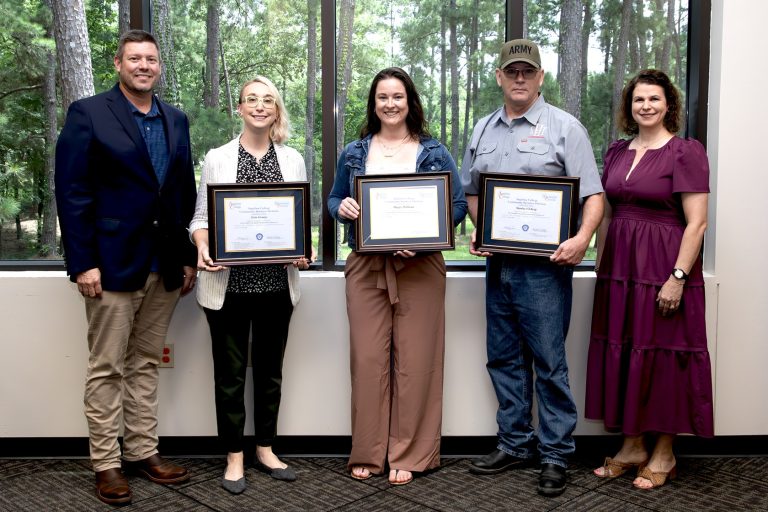
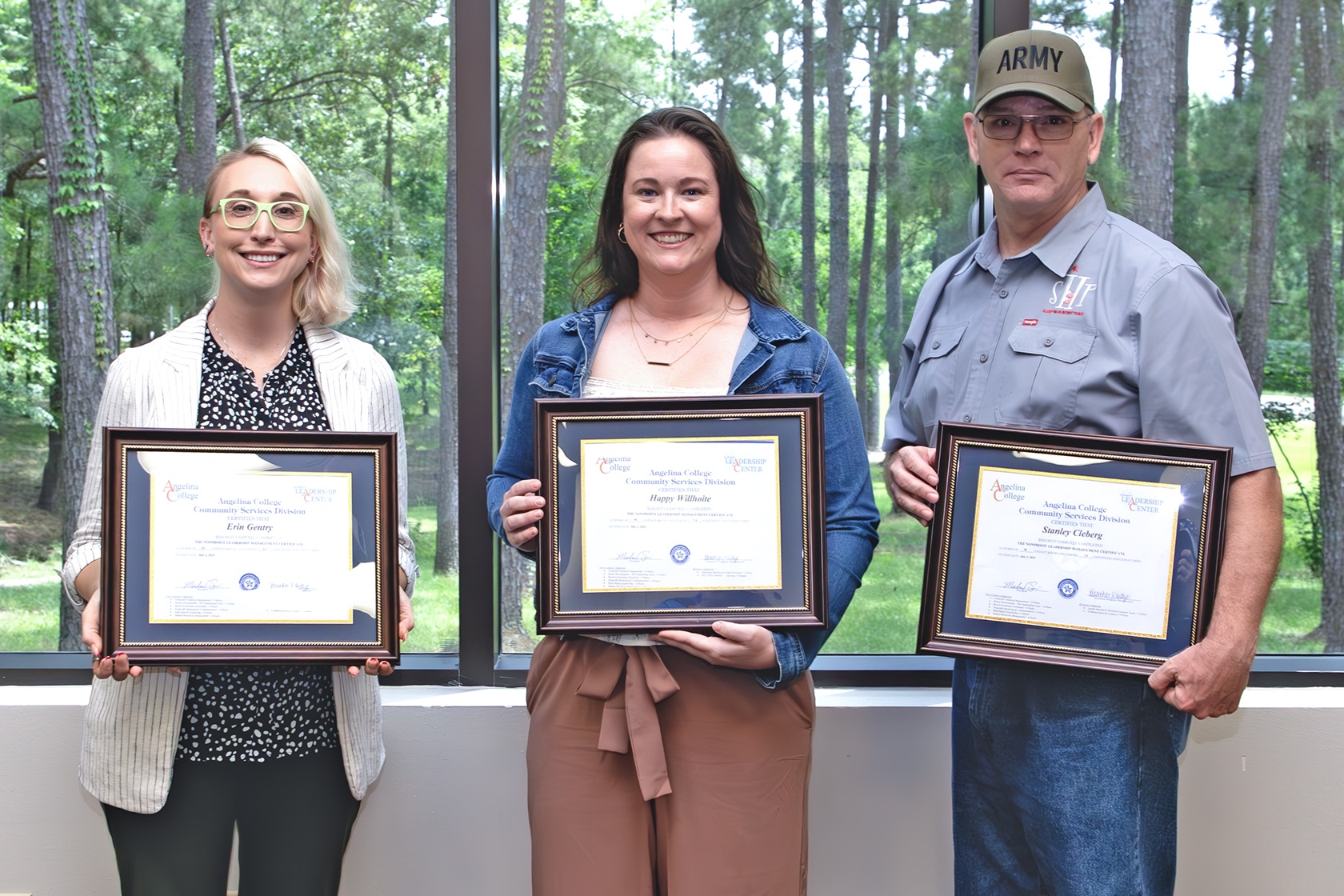
The Nonprofit Leadership Center at Angelina College recently recognized three new recipients of the Nonprofit Leadership Management Certificate following completion of the course. Pictured are (L-R) Erin Gentry (Naranjo Museum of Natural History), Happy Willhoite (Love INC, Nacogdoches) and Stanley Cleberg (Sleep in Heavenly Peace, Woodville). (Gary Stallard photo for AC News Service)
Happy Willhoite (Love INC, Nacogdoches), Erin Gentry (Naranjo Museum of Natural History) and Stanley Cleberg (Sleep in Heavenly Peace Organization) each received the Nonprofit Leadership Management Certificate following completion of the course, which includes six eight-hour core classes: Nonprofit Financial Management, Donor Development, Board Governance Essentials, Marketing and Communication, High Impact Leadership and Human Resources Management.
Also required is a minimum of two electives, which includes various conferences and “Lunch-and-Learn” sessions.
Heather Kartye, Director of the NPLC, praised the recipients for their ability to work together while completing the rigors of the course.
“I know you guys are kind of your own cohort now after bonding throughout these classes, and it’s amazing to see you here and celebrate your accomplishment,” Kartye said. “You guys worked very hard to meet all the requirements, and we’re so proud to see you receive your awards.”
Willhoite, a Nacogdoches native, said Love INC – a national organization with just two chapters in Texas – partners with area churches to “mobilize them to serve the community.”
“My director, Patty Goodrum, showed me this Nonprofit Leadership Center here at AC, and Heather (Kartye) was once part of the Family Crisis Center,” Willhoite said. “We had some relationships already in place, but I wanted to learn more about nonprofits while understanding how other organizations work together. We want to promote this program (Love INC) as much as possible.”
Gentry, who serves as Executive Director of the Naranjo Museum of Natural History in Lufkin, said the NLPC
“I believe in the community, and I also believe it’s important to pursue education to continue to bolster yourself so you can give back even more,” Gentry said.
“This is a very creative community, and we’ve seen a rise in artists coming together,” Gentry added. “We’re looking into a variety of what I like to call ‘Edu-tainment’ spaces where one gets a little bit of entertainment and a little bit of education. It’s a perfect blend, and that’s really what I’m trying to bring into the museum and expand for us as we move forward.”
Cleberg is chapter co-president for the Sleep in Heavenly Peace Organization, an international group with chapters in 49 of the 50 United States, as well as in Canada and the Virgin Islands.
“We build beds for kids who don’t have them. Our mission is to solve child ‘bedlessness.’ It’s a made-up word, but it works,” Cleberg laughed.
Cleberg said currently the total of beds delivered is up to more than 275,000 nationally. His Woodville chapter supplies Tyler, Jasper, and Sabine counties.
“These are all hand-crafted beds built by volunteers, and it’s made of wood, so if I kid can break it, he’s going to have to work hard at it,” Cleberg said. “We build beds once per month, and we try to deliver around 25 beds per month in our service area.”
Cleberg said completing the NPLC course at Angelina College offered several benefits, including expanding recruiting efforts.
“For me, it’s an opportunity to improve my ability to work with other organizations,” Cleberg said. “We try and work with our local organizations such as Child Protective Services, local law enforcement and local churches. I wanted to use this opportunity not only to connect, but also to recruit in hopes of finding people willing to jump in and help start new chapters.
“We’re hoping to find another brave soul to help us start a chapter here in Angelina County. We’re always looking for volunteers. Our website is shpbeds.org, and we have a Facebook page at ‘Sleep in Heavenly Peace Woodville.’”
For further information on Angelina College’s Nonprofit Leadership Center, contact Heather Kartye at hkartye@angelina.edu.
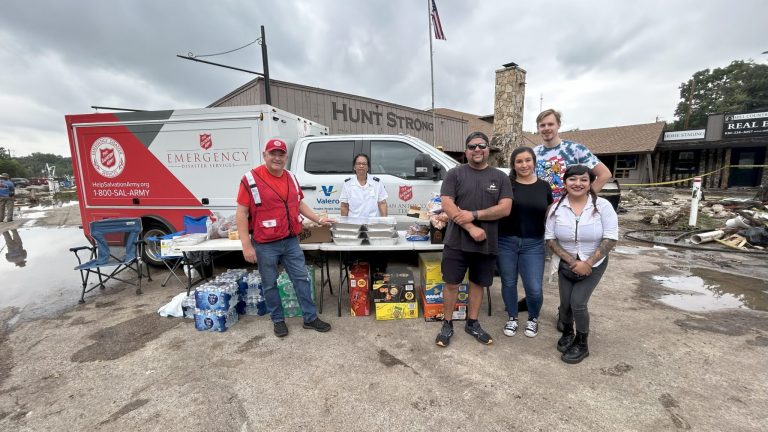
Dallas, Texas (July 6, 2025) – Salvation Army Emergency Disaster Services (EDS) teams are working around the clock to provide meals, hydration and Emotional and Spiritual Care (ESC) in Central Texas communities affected by devastating flooding. Rain is forecast to continue Sunday in areas already overwhelmed with flooding after the Guadelupe River crested with historic levels of waterflow.
Local officials have confirmed more than 50 fatalities in Kerr County as a result of the raging floodwater that struck in the early hours of July 4, with multiple individuals still reported missing. Search and rescue is ongoing as roads are steadily being cleared and the river level slowly recedes.
“The Salvation Army is currently serving in the affected communities of Hunt, Ingram, and Kerrville. We have three fully stocked mobile feeding units that began Saturday morning serving survivors at emergency shelters in Kerrville,” said Major Phil Swyers, with The Salvation Army in Kerrville. “However, when word was received that the road to Hunt was reopened, we sent the two units from San Antonio to serve impacted residents in that city which had been cut off since Friday.”
Since service began on July 4, The Salvation Army has served 1,700 meals, 290 snacks, and more than 10,000 drinks. Cleanup kits, hygiene kits, blankets and other essential items are available.
“The Kerrville mobile kitchen and disaster team has been stationed at the City West Church in Ingram providing around the clock support to first responders and law enforcement personnel,” said Swyers. “It is estimated that close to 1,000 additional first responders representing many different agencies have arrived in Kerrville over the last two days. It has been a blessing for The Salvation Army to provide 24-hour support as they tirelessly work to help in our community. They have been grateful to receive a meal, drink and a word of encouragement or prayer from our team.”
In San Angelo, The Salvation Army staff and volunteers served first responders and flood survivors from the mobile kitchen throughout the day staged at Hargraves Auto. Service will continue Sunday with additional support arriving in the form of the Big Lake Rapid Response Unit and a trained EDS team from Midland.
The Salvation Army leadership in Kerrville is working closely with County and State Officials and will begin to accept in-kind donations from the community and beyond. This is a huge logistical undertaking, and The Salvation Army will manage the receiving, organizing and distribution of those supplies to impacted individuals and families in the coming days, support by Texas EDS staff.
“Kerrville is a relatively small community with a population of only around 27,000 people. The Salvation Army has worked in this community for many years, and we are uniquely positioned to step forward and partner with the county and city in this way,” said Swyers. “However, we need the communities continued to support in the form of donations and volunteers.”
Financial donations are the best way to support The Salvation Army’s ongoing response efforts in Central Texas. To make a donation, call 1-800-SAL-ARMY or go to helpsalvationarmy.org. 100% of all donations designated for disaster response will support the relief efforts and help impacted individuals and families.
For more information on The Salvation Army’s current disaster response efforts and specific feeding locations, go to www.salarmyeds.org.
The new soccer schedules are here and ready for your viewing pleasure, and we’ve still got some big sports camps on tap to help wrap up what’s been a busy summer.
Here’s a quick rundown of the past week’s events, along with what’s coming up next:
Soccer Schedules Set for 2025 Season
The Lady Roadrunner and Roadrunner soccer teams have released their schedules for the upcoming season (which is rapidly approaching), so fans can start making plans to show up and show out while cheering on both AC teams.
Included in the schedule are five home doubleheaders, one of which is the Tuesday, August 12 scrimmage against Wiley College. The ladies kick off at 5 p.m. while the men follow at 7:30 p.m.
Printable versions of the schedules are attached to this email.
Roadrunner Soccer Sets Summer Camp Schedule
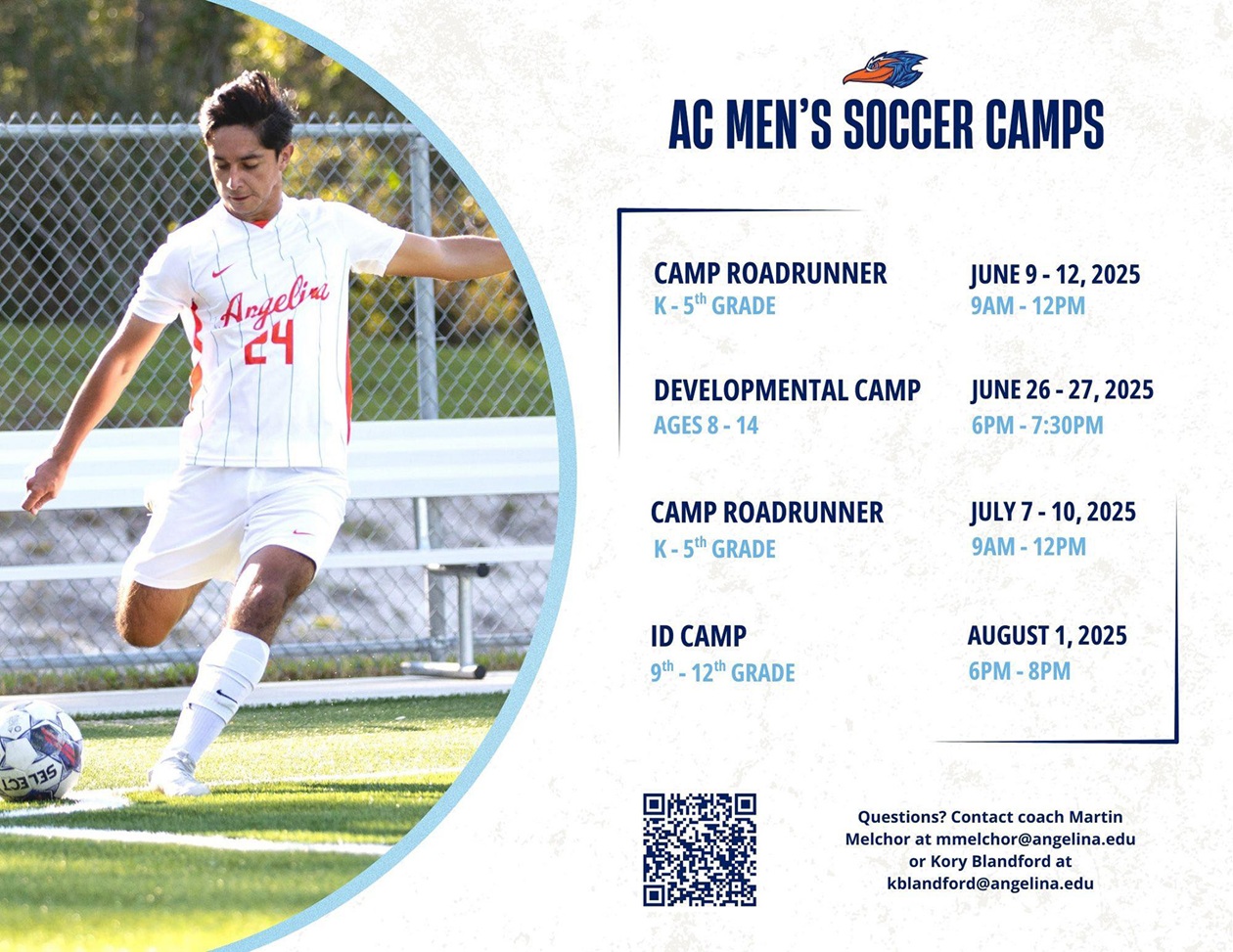
The Roadrunner men’s soccer team has added an ID Camp to its busy summer list.
The ID camp, used to identify prospective future Roadrunners, is for grades 9-12 and will take place from 6-8 p.m. on August 1 at the Angelina College soccer pitch on the AC campus.
Click the following link for all registration and other information:
AC’s Camp Roadrunner Remaining Sessions or Summer 2025
Over the past few years, Camp Roadrunner has become a “gotta do” event for youngsters throughout East Texas, with the recreational and youth sports camps drawing bigger crowds every summer.
Following are the remaining dates for each Youth Sports Camp:
Basketball: July 7-10 (6-12th Grade); July 21-24 (6th-12th Grade)
Soccer: July 7-10
Athletics Schedule Releases Coming in July
All six Angelina College athletics teams are finalizing their 2025-2026 schedules, and those schedules should be ready for release in early July. We’ll send out hard copies in a group email, and we’ll also send the link to the Angelina College Athletics website for further viewing.
We should have all available schedules loaded on-line this coming week. Naturally, there may be some changes along the way with teams still looking to add events. The best way to follow any possible changes is to visit the Angelina College Athletics website (angelinaathletics.com).
Live Streaming Reminder:
All AC Athletics regular-season home games are live streamed on TSBN Sports (a free streaming service for fans), with most of the conference road games also available for streaming. (This does not include baseball and softball fall games, as those are not considered official games.)
Once TSBN posts its schedules, AC fans simply need to visit the AC Athletics web site, look at the scrolling schedule in the middle of the page and click the blue “Video” link.
TSBN also offers an app great for smart phones, devices and smart TVs. (You’ve GOT to see those matches and games on the big screen.)
Reminder II: Admission to ALL Angelina College Athletics sporting events is free, as is the TSBN live streaming. Any other links offering streaming are scams.
Reminder III: For the most current schedule updates (especially for potential weather issues) visit the official Angelina College Athletics website (angelinaathletics.com). Fans can also receive updates on the AC Athletics Facebook, X/Twitter), and Instagram pages.
Upcoming schedules: No further games scheduled until August.
For any other information, contact Sports Information Director Gary Stallard at gstallard@angelina.edu.
If you own or run a business in the Texas Forest Country—whether it’s a feed store, a family clinic, a boutique downtown, or a church—you know that every dollar counts. And that includes your electricity bill.
But here’s the thing: Most businesses in our area are overpaying for power, and they don’t even know it.
We hear this time and time again. “I thought my rate was locked in.” “I didn’t know my contract expired.” “No one ever told me I could shop around.”
Sound familiar?
Why So Many Local Businesses Pay Too Much
It happens quietly. You sign a contract with a provider, forget about it, and one day that contract ends—without warning. Suddenly, you’re on a “flex rate” or default plan, and your bill jumps by hundreds—or thousands—overnight.
We’re talking real numbers from real folks here in East Texas.
One local restaurant owner saw their electric bill shoot up from $1,800 to over $2,600 in a single month. A small-town gym in another part of the state? They were hit with a $4,000 bill after their contract expired without notice.
There Is a Better Way (And It Doesn’t Cost You a Dime)
We recently spoke with the team at Amerigy Energy, a company based right here in Texas that helps homeowners and business owners navigate the retail power market.
They work with over 100 electricity providers and offer free bill reviews for local businesses. That means they’ll:
Look over your current contract Compare rates across the market Suggest smarter plan options for your usage Help you avoid sneaky fees or surprise rate hikes
Think of them like the insurance broker for your power bill—they shop the market so you don’t have to.
A Smart Move for Small Business Owners
Whether you’re running a feed store, managing church facilities, or operating a local salon, the last thing you want is to get blindsided by rate hikes.
Energy costs are one of the easiest expenses to overlook—but also one of the easiest to reduce with just a bit of guidance.
And in towns like Lufkin, Nacogdoches, Crockett, and Alto, we’ve seen the impact a few hundred dollars a month can make on the bottom line.
Want to Know What You Could Save?
Amerigy Energy makes it simple. You can send in a copy of your latest electric bill (no pressure, no obligation), and their team will break it down line-by-line. If there’s a better rate out there, they’ll help you lock it in.
Earlier this week while assisting a resident just south of Lufkin, I noticed a wild grapevine with numerous clusters of small green grapes. Two weeks ago, while visiting my son and daughter-in-law in Waco, I noticed they had some grapevines on their old fence that bore smaller clusters with much larger native green grapes.
As a kid growing up in Johnson County, Texas, I remember my mom used to go down the country roads and pick wild grapes for jelly making. I believe she called them Mustang grapes, but it has been too long for me to be certain.
Throughout our state, we have a variety of wild/ Muscadine-type grapes. In our office, we have an excellent book, Trees, Shrubs and Woody Vines of East Texas. The author is Elray S. Nixon. I’ve met the illustrator, Bruce Lyndon Cunningham who had a studio in Nacogdoches. If you are ever at all interested in our native woody plants, this is an excellent book.
In this book, the author lists seven different grape-type (Vitis) plants in east Texas. These are the Mustang grape, Sweet winter grape, Summer grape, Muscadine grape, Fox grape, Riverbank grape, and the Catbird grape.
Another good reference book we have is Native Texas Plants by Sally and Andy Wasowski. Now their book covers all of Texas and this book lists 22 locally named native grapes! I really have a hard time believing there are 22 separate varieties and they do allude to that, but the fact remains, there are several variants of wild grapes that occur naturally.
For folks wanting a native grape arbor, Muscadines (Vitis rotundifolia) are the largest bearing native grape of which there are many developed varieties. Muscadines work very well in our climate and are incredibly disease resistant (something that their European relatives have great difficulty with.)
Deep, sandy, and slightly acidic soils are best, although they are quite tolerant of other soil types. Lime is not needed, and light fertilization will supply all they need.
If shade is an issue, realize that Muscadines can do fairly well in a dappled shade environment. In fact, much of their habitat is under the shade of our large pines. However, for maximum production, plant them in a location that will receive a full eight hours of sun.
What is definitely needed is a sturdy fence, arbor or other structure on which the vines will grow. Over time the vines will become quite strong and if you are a successful grower, you’ll have plenty of weight to support. In fact, think a couple years down the road to make sure that you can prune the vines so that they will not cover the house or otherwise get unruly.
If planting just one vine, you’ll want to be sure to choose wisely, as some need a pollinator and others are self-fertile.
Varieties to consider for self-fertile varieties include: Carlos (a bronze-colored grape), Cowart (black), Ison (black), Janebell (bronze), Magnolia (bronze), Noble (red), and Triumph (bronze).
Female blooming varieties that do need a pollinator include: Darlene (bronze), Fry (bronze), Higgins (black-bronze), Hunt (black), Jumbo (black), Pam (bronze), Scuppernong (bronze), Summit (bronze), and Sweet Jenny (bronze).
Most bronze varieties are commonly referred to as Scuppernongs and are favored by many. All types will be enjoyed by any and all wildlife you have in the area, so be prepared to share.
Depending on variety and climate, Muscadines ripen in late summer to early fall. Pick when soft and with a dull bloom on the fruit.
Stay safe from mosquito-borne disease by preventing bites
With West Nile virus present in Texas, mosquito bites escalate beyond an itchy annoyance to a potentially deadly threat.
In response to the virus’s continued presence throughout the state and U.S., Texas A&M AgriLife Extension Service experts advise residents to be mindful of areas with reported cases in humans, birds, horses and mosquitoes.
“Staying informed about local mosquito activity and taking preventive measures can help keep you and your family safe from the potential dangers of West Nile virus,” said Sonja Swiger, Ph.D., AgriLife Extension entomologist and professor in the Texas A&M College of Agriculture and Life SciencesDepartment of Entomology.
West Nile cases have been reported in the 48 contiguous U.S. states. Last year, more than 1,400 cases were reported in 43 states.
What are the symptoms of West Nile virus?
Most people infected with West Nile virus do not experience symptoms. However, about one out of five infected people experience flu-like symptoms, and about one out of 150 infected people develop a serious and potentially fatal illness from the virus.
Symptoms of West Nile virus disease in humans include:
High fever.
Skin rash.
Fatigue.
Headache.
Neck stiffness.
Disorientation.
Muscle weakness.
Convulsions, numbness, paralysis and coma — in extreme cases.
Mild symptoms of West Nile virus disease typically last a few weeks, but fatigue, muscle weakness and joint pain can linger for months.
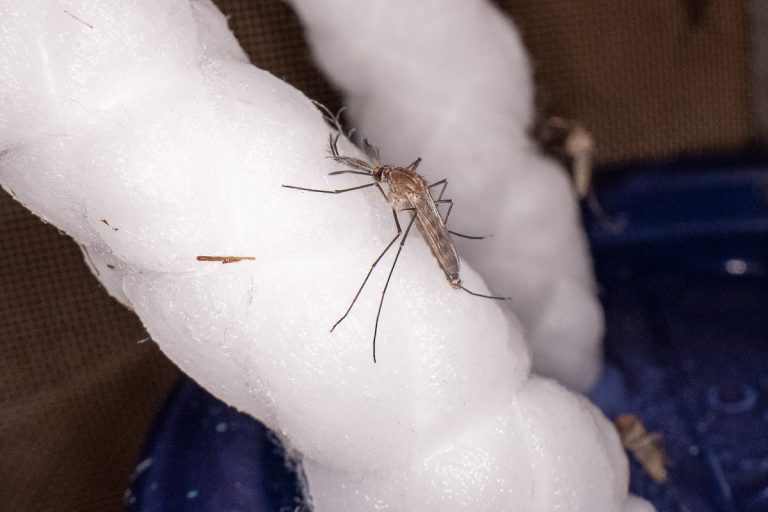
The Culex quinquefasciatus, or Southern house mosquito, can transmit West Nile virus. Some simple precautions around the home can reduce the risk of their bite. (Courtney Sacco/Texas A&M AgriLife)
How does West Nile virus spread?
Swiger said West Nile virus is circulated in the environment between birds and mosquitoes in the Culex genus.
Infected mosquitoes can spread the virus to humans, horses and some birds, leading to a range of disease symptoms and adverse health effects. The virus cannot spread from person to person or between animals, except in rare cases of direct bodily fluid transmission, such as blood transfusions.
Vaccines are available to prevent illness in horses, but the only protection for humans is to prevent mosquito bites.
How to protect yourself and your family
Swiger recommends people stay vigilant of their surroundings to reduce the risk of transmission.
While mosquito populations generally boom following heavy rainfall, those that carry West Nile virus reach higher populations during dry conditions. Swiger said pooled water becomes stagnant and an ideal environment for virus carriers to lay their eggs thus increasing their population.
She recommends removing water from any items near households, such as flowerpots, buckets and wheelbarrows. You should also drain or cover backyard pools that are not in use as a precaution.
Culex mosquitoes that transmit West Nile virus feed at dusk and throughout the night, with peak activity from 9 p.m. to 2 a.m., Swiger said. She recommends limiting your time outside during those hours and watching for mosquitoes as you leave and enter your home. While this mosquito is active outdoors at night, it will come inside the home in search of a blood meal.
Light-colored, long-sleeved shirts and full-length pants also help protect against mosquito bites, along with repellents like DEET, picaridin, oil of lemon eucalyptus, IR3535 or 2-undecanone, which are registered with the Environmental Protection Agency and approved by the CDC to protect against biting mosquitoes.
“The number of West Nile virus cases varies from year to year, but it’s something we always want people to stay mindful of,” Swiger said. “Taking preventive steps to reduce the risk of bites is the best way to protect yourself and others.”
On an unseasonably cool Thursday, July 4, 1776, the Second Continental Congress declared total independence from King George III and Great Britain. In doing so, the founding fathers threw off the yoke of tyranny, creating a new form of government whose power was to be derived only from the consent of the people they governed. Radical at the time, the actions of men such as John Adams, Benjamin Franklin, and Thomas Jefferson paved the way for the United States Constitution just 13 years later, and what we know today as the longest-standing constitutional republic in the world.
While we celebrate our great nation with an afternoon cookout with family and friends, attending a patriotic parade, or celebrating with fireworks, let us remember that we, as citizens of the greatest country on God’s Earth, must continue to strive to create a more perfect Union and make good on the promise of our Declaration of Independence:
“We hold these truths to be self-evident, that all men are created equal, that they are endowed by their Creator with certain unalienable Rights, that among these are Life, Liberty, and the pursuit of Happiness.”
With that, here’s an update from your State Capitol…
Capitol Update
As I’ve noted in previous columns, bolstering our state’s workforce has been a top priority of mine. With our state population on pace to double by 2050, there’s no time to waste in proactively planning to meet the workforce needs of a growing state. Fortunately, the Legislature made measurable progress this session to address Texas’s needs for a strong and sophisticated workforce.
House Bill 20 creates an applied sciences pathways program for our high school students to go into high-demand technical jobs. House Bill 120 expands access and funding for Career and Technical Education (CTE) programs to ensure high school students are career-ready. Both HB 20 and HB 120 passed through the Subcommittee on Academic and Career Oriented Education, the subcommittee I’m honored to chair, and I was glad to see both make it through the legislative process and on to the Governor’s desk.
Additionally, Senate Bill 2448, which I was proud to author, establishes the Rural Workforce Development Grant Program to encourage non-profits in rural communities like ours to improve workforce training and address critical skills gaps to help reduce our rural workforce shortage.
As a result of these bills, and similar legislation from previous sessions, I was delighted to see that Governor Abbott announced two Jobs and Education for Texans (JET) Grants to both Angelina College and Warren ISD. Angelina College received a grant of nearly $340,000 to train 90 students to be welders, and Warren ISD received a grant of nearly $300,000 to train 60 students in partnership with Lamar State College – Orange, also as welders.
I am proud to have supported and authored large initiatives during this past session and previous sessions, which will help meet the workforce demands of Deep East Texas. I am equally grateful to Governor Abbott and the Texas Workforce Commission for committing funds back to Deep East Texas to continue our endeavor to train and build up our workforce.
As a reminder, the mobile office is taking a break from the road in July, but will be back in August. In the meantime, please do not hesitate to contact my office if we can help you in any way. My district office may be reached at (936) 634-2762 and my Capitol office may be reached at (512) 463-0508. Additionally, I welcome you to follow along on my Official Facebook Page, where I will post regular updates on what’s happening in your State Capitol and share information that could be useful to you and your family: https://www.facebook.com/RepTrentAshby/.
When John Hart signed the Declaration of Independence in 1776, he wasn’t just making a political statement – he was igniting a legacy. That signature wasn’t written in ink alone; it was written in sacrifice, conviction, and courage. And while history books remember him as one of the 56 Founders who dared to defy a king, our family remembers him as something more: a starting point.
That single act – of putting pen to parchment knowing the cost – set into motion a legacy that wouldn’t end with his death just three years later. It was carried forward by his children, and their children, through generations of Harts who served, settled, prayed, and persevered.
Liberty didn’t end at Philadelphia. It moved west. It grew through the hearts and hands of sons who traded powdered wigs for plows, battlefields for barns, and pulpits for pews. It moved through the hills of Missouri and across the plains of Texas. It was carried in worn Bibles, family prayers, and strong backs.
For my family, that signature echoed through time – showing up in the war records of soldiers, in the quiet strength of pioneers, in the kind eyes of teachers and pastors, and in the steady hands of farmers. And yes, it shows up today, even here in East Texas, in the way I raise my family and lead my work – with that same call to conviction.
John Hart lit a torch. My family has carried it for over 240 years. This is the story of how.
The Flushing Remonstrance of 1657: Liberty Signed in Chains
Long before John Hart signed the Declaration of Independence, the flame of American liberty had already been lit in our family—by a man who would risk not only his reputation, but his very freedom to defend it.
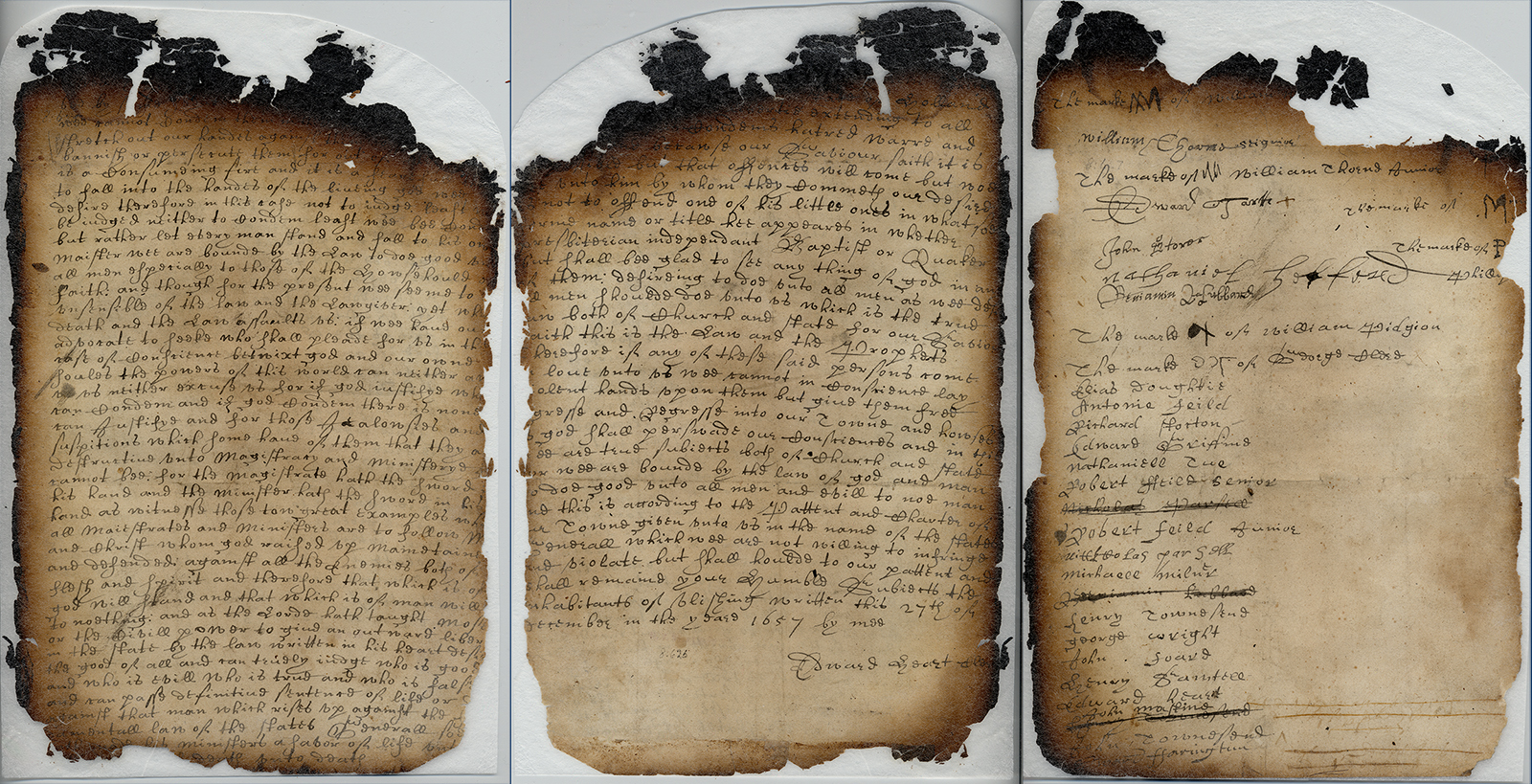
That man was Captain Edward Hart, my sixth great-grandfather and father of John Hart. In 1657, as town clerk of Flushing, a small village in the Dutch colony of New Netherland, he authored what many historians consider one of the earliest and most powerful declarations of religious liberty in American history: The Flushing Remonstrance.
The Flushing Remonstrance
At the time, Dutch Governor Peter Stuyvesant had issued harsh orders forbidding public religious gatherings by anyone outside the Dutch Reformed Church. Quakers, Baptists, and other dissenters were being fined, imprisoned, exiled, or worse. This was in stark contrast to the Dutch Republic’s own legacy of religious tolerance.
But Edward Hart and 29 other brave signers knew this policy was wrong. In language that still resonates today, the Remonstrance proclaimed:
“The law of love, peace and liberty in the states extending to Jews, Turks and Egyptians… for the law of conscience is God’s law.”
Though none of the signers were Quakers themselves, they defended their neighbors’ right to believe and worship as their consciences dictated. For them, religious liberty wasn’t just a Quaker issue—it was a human issue, one that transcended denomination and demanded moral clarity.
The result?
Governor Stuyvesant responded with fury. He dissolved the Flushing town government, arrested several signers, and imprisoned Edward Hart—who was already an older man—on rations of bread and water. Alongside Sheriff Tobias Feake, Hart endured over a month in jail for refusing to recant his principles. Ultimately, friends and family petitioned for his release, and Hart was freed—but banished from public office for his defiance.
That’s what religious liberty cost in 1657.
And yet, Hart never backed down. His act of conscience—quiet, reasoned, but unyielding—laid a spiritual foundation that would one day be echoed by his son John in the halls of Independence.
The Flushing Remonstrance predates the First Amendment by over a century, but it set a tone that would shape the American conscience: that liberty is not a privilege granted by rulers, but a right granted by God.
From a jail cell in Flushing to a parchment signed in Philadelphia, the Hart legacy is one of leadership with conviction. And for me, knowing that my family’s fight for liberty began not on a battlefield, but in a courtroom—and yes, in a prison cell—grounds my sense of calling today.
It reminds me that freedom isn’t free—and never has been.
From Father to Son to Grandson: The Legacy Carried Forward
Captain Edward Hart sowed the seeds of liberty by defending the right to worship freely. His son, John Hart, watered those seeds with bold action – signing the Declaration of Independence, hosting General Washington’s troops, and enduring personal loss for the sake of freedom.
But the story didn’t end there.
John’s own son, Edward Hart, inherited not just land and a family name – but the full weight of this heritage. And like those before him, he chose not to rest in comfort, but to stand in service.
Born in 1755 in Hopewell, New Jersey, Edward Hart came of age during the American Revolution. While his father debated and signed founding documents, Edward picked up a musket. He fought as a private in the New Jersey militia, defending the very liberties his father helped to proclaim.
Edward’s courage wasn’t as public as John’s, but it was no less real. He marched under Washington’s command, endured the brutal winters of the war, and returned home to rebuild a fledgling nation from the ashes of conflict.
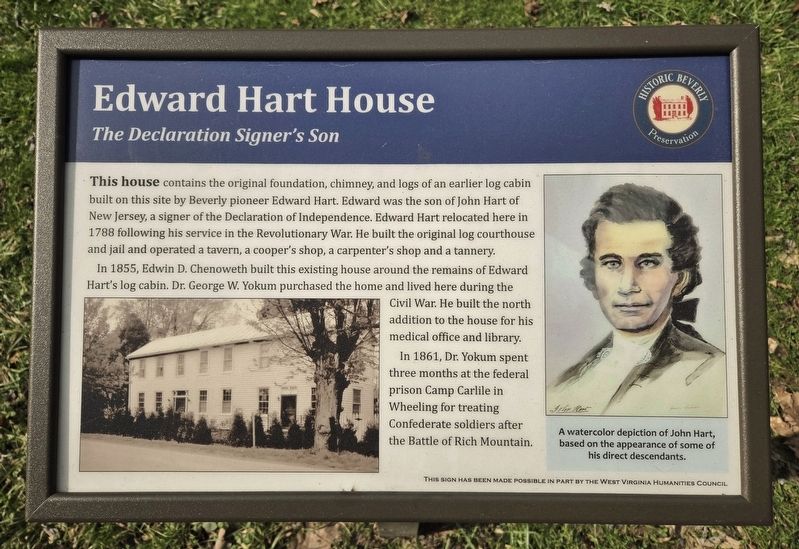
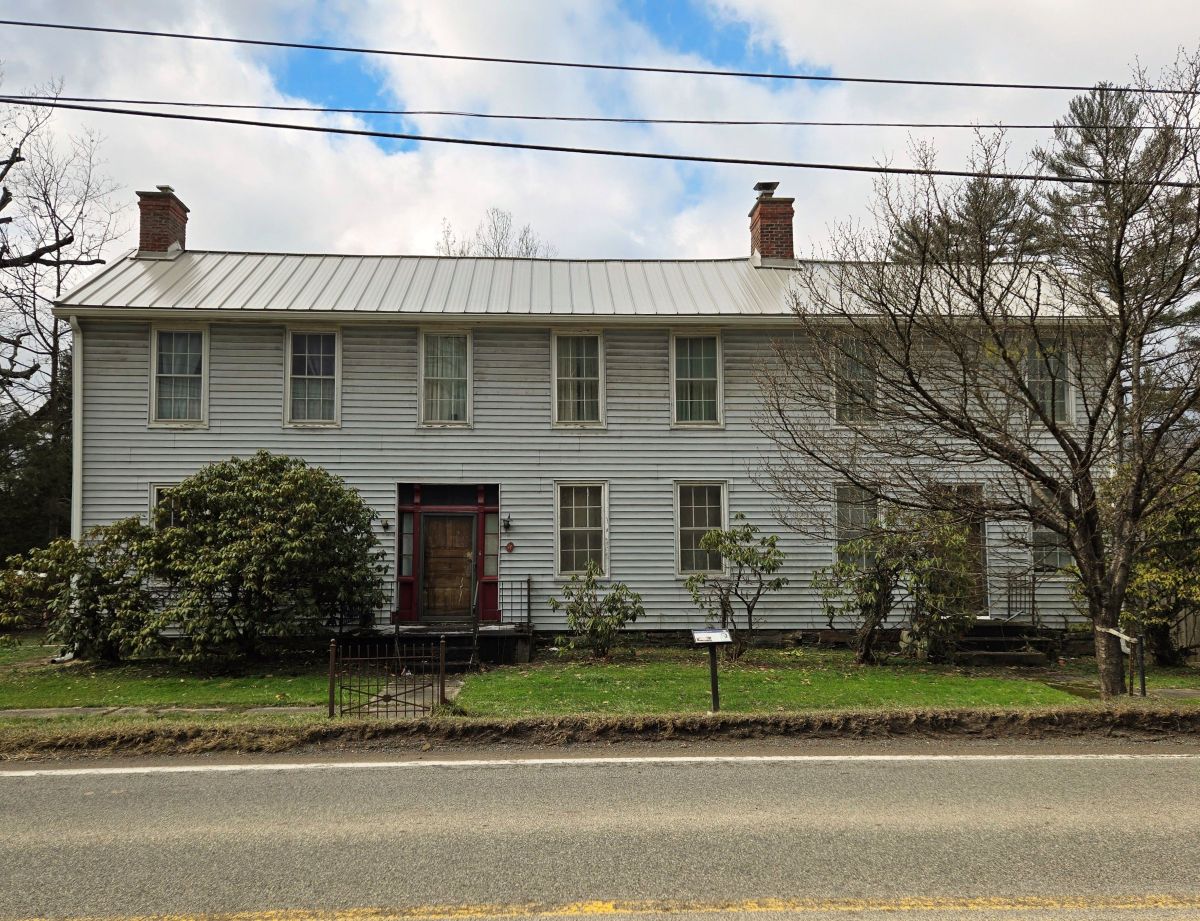
Edward Hart House Marker
When war came to the colonies, Edward was just twenty years old. While his father pledged his life, fortune, and sacred honor in Philadelphia, Edward picked up a musket and joined the New Jersey militia. He served during some of the hardest days of the Revolutionary War under the leadership of General George Washington, facing British forces who had occupied much of his home state. The war wasn’t fought in faraway fields – it was fought in his backyard, along roads he’d ridden as a boy, in towns his father had represented.
It’s possible that Edward was present for, or near, critical moments in New Jersey’s wartime story: the retreats, the bitter cold, the small victories that eventually turned the tide. He likely felt the weight of both duty and expectation – not only as a soldier of the cause, but as the son of a man marked for death by the British Crown.
Edward Hart House today
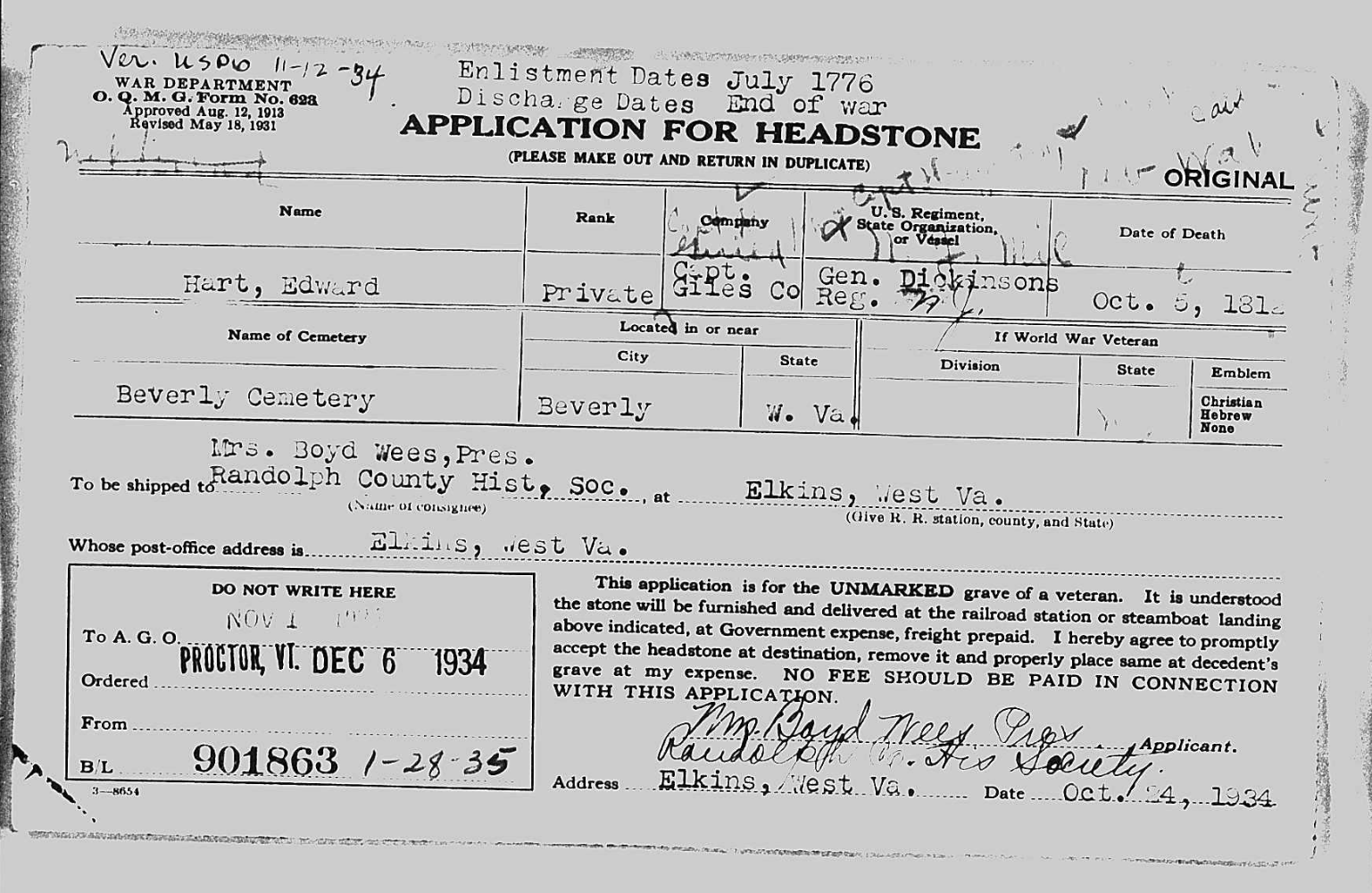
He married Nancy Ann Stout – a union some say was witnessed by Washington himself – and eventually moved his family to Randolph County, Virginia (now West Virginia), where he continued a life of civic responsibility and humble strength. He was buried there in Beverly Cemetery, but his legacy stretched much farther.
In Edward Hart, we see the through-line of American freedom – not in headlines, but in generational faithfulness. The kind of leadership that moves quietly through time, from battlegrounds to church pews, from father to son, from ancestor to descendant.
From Edward’s generation sprang a westward wave of Harts – into Kentucky, Missouri, Texas, and beyond. They took with them the memory of battle and the discipline of purpose. And through the generations, they continued to serve – as soldiers, farmers, preachers, and patriots.
In Edward Hart, I see the blueprint of my own life – a man shaped by history but grounded in humility. He didn’t need a title or a monument. His legacy is found in the hands he held, the land he tilled, and the children he raised.
Freedom isn’t just declared. It’s defended, lived, and passed on.
And Edward Hart – quiet, courageous, and faithful – passed it on.
Pleasant Albert Hart: The Civil War Son of Liberty
By the mid-1800s, the American experiment that John Hart helped birth was being tested by fire again – this time, not from a foreign king, but from within. The Civil War tore through the heart of a divided nation, and once again, the Harts were there to stand for what was right.
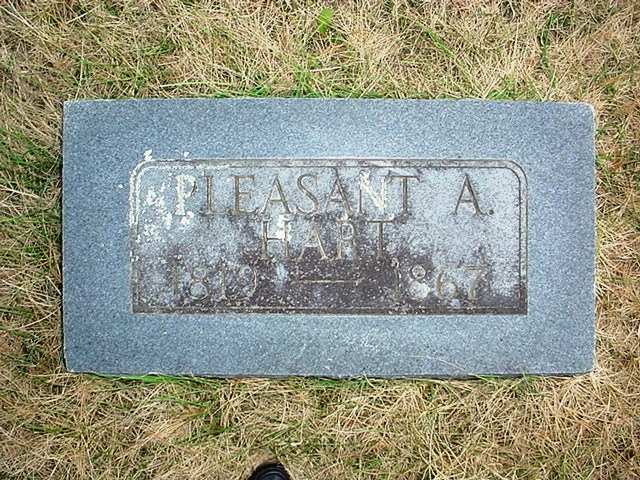
Pleasant Albert Hart, grandson of John Hart and son of Edward Hart, was born into a world shaped by independence, but marred by conflict. Raised on the stories of revolution and guided by the hard-earned values of honor, faith, and service, Pleasant didn’t hesitate when the call came. He stood with the Union Army, defending the fragile unity of the country his grandfather had helped to create.
Records show that Pleasant served with distinction, likely in a Missouri regiment – a state split between North and South, where loyalties often divided families and communities. Fighting in border states was brutal and deeply personal. These weren’t just battles of strategy – they were fights for the soul of the nation. Pleasant’s service demonstrated not only loyalty to the Union but a continuation of the Hart family’s unwavering commitment to justice and country.
He was not a politician, nor a wealthy landowner. Like John and Edward before him, Pleasant was a man of the people – a farmer, a father, a believer in the American promise. His courage wasn’t forged in high chambers of power, but in the muddy fields and torn hearts of a nation at war with itself.
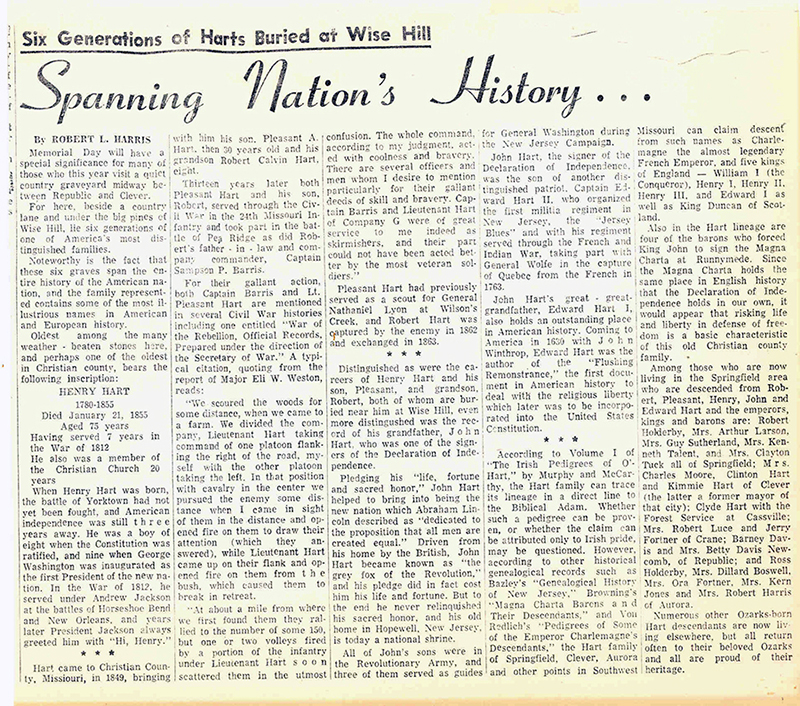
Article published in the early 70’s that began the author’s journey to find out more.
After the war, Pleasant settled his family in Missouri, one of the western frontiers of the postwar United States. Like his father before him, he worked the land, built his home, and instilled in his children the values of personal sacrifice, integrity, and faith in something greater than themselves.
Pleasant’s legacy may not be etched on monuments, but it lives on in something far more enduring: the stories passed down through generations of Harts who believed that America was always worth fighting for. His life bridged yet another era – from the founding of the nation, to its greatest trial – and he stood faithful to both.
His name, “Pleasant,” may sound gentle, but make no mistake: his life was anything but easy. He carried on the family tradition not through ease or acclaim, but through sacrifice and grit. He honored the Hart legacy not just by remembering it, but by living it – day by day, battlefield by battlefield, generation by generation.
From Frontier Roads to East Texas Roots – The Westward Journey of the Harts
After the Civil War, a new frontier beckoned. The war was over, the Union preserved – but the land itself still called. For the Hart family, the promise of a fresh start wasn’t in the halls of Congress or among city streets. It was out west, where faith, freedom, and family could grow tall like East Texas pines.
Pleasant Albert Hart, like many veterans and frontier men of his time, moved his family westward through Missouri, then further into Texas, seeking land, opportunity, and peace. His son, Robert Calvin Hart, was born into this pioneering era – a time when wagons carried hopes, and men still carried rifles to protect their families and principles.
Robert Calvin, my great-great-grandfather, was a man shaped by transition – by the stories of war, and the quiet strength it takes to raise crops, raise children, and raise a community in unsettled land. He lived through the final days of Reconstruction and the start of a new American century, and passed down the values that had traveled from New Jersey through generations of faithful men.
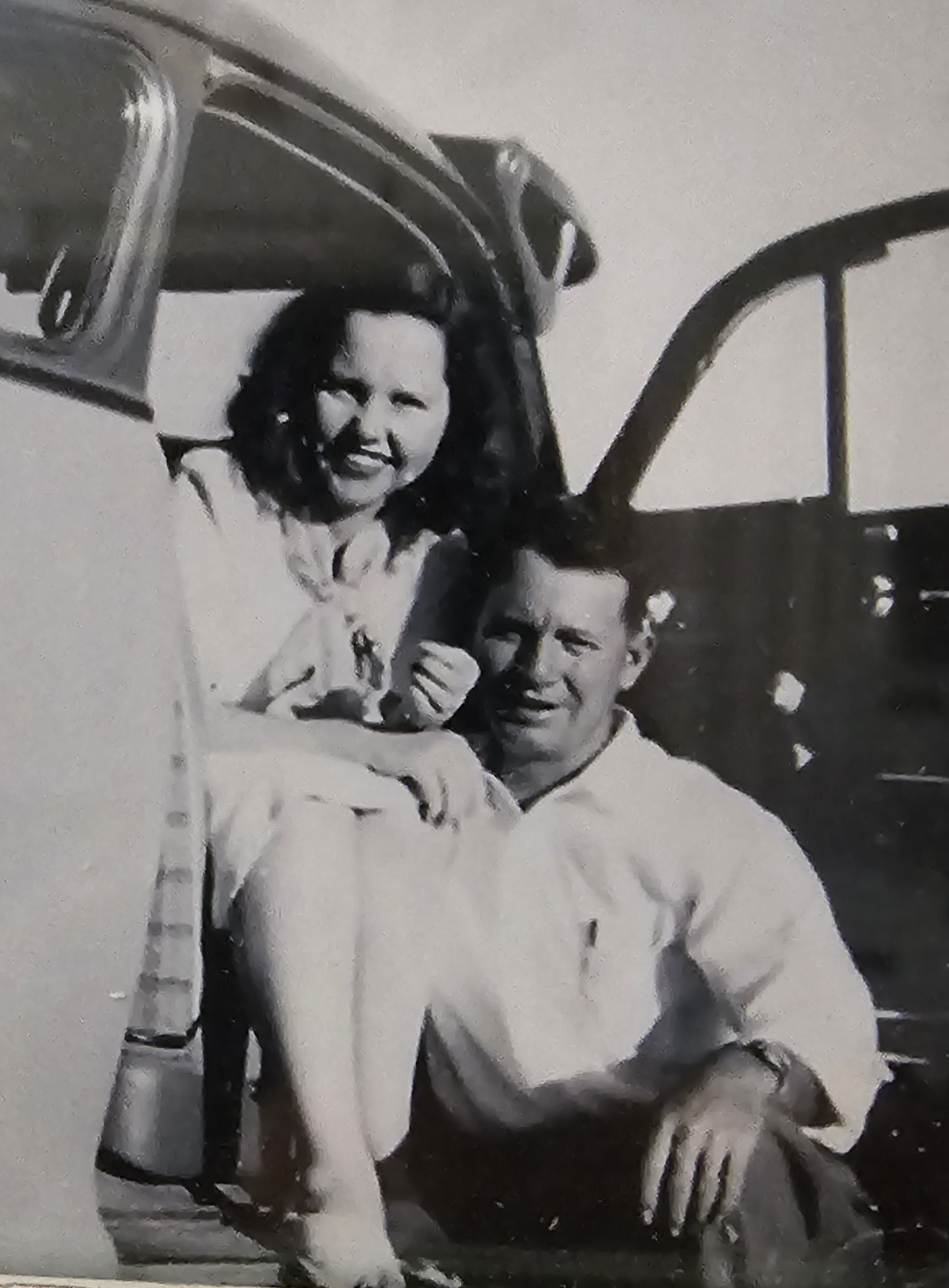
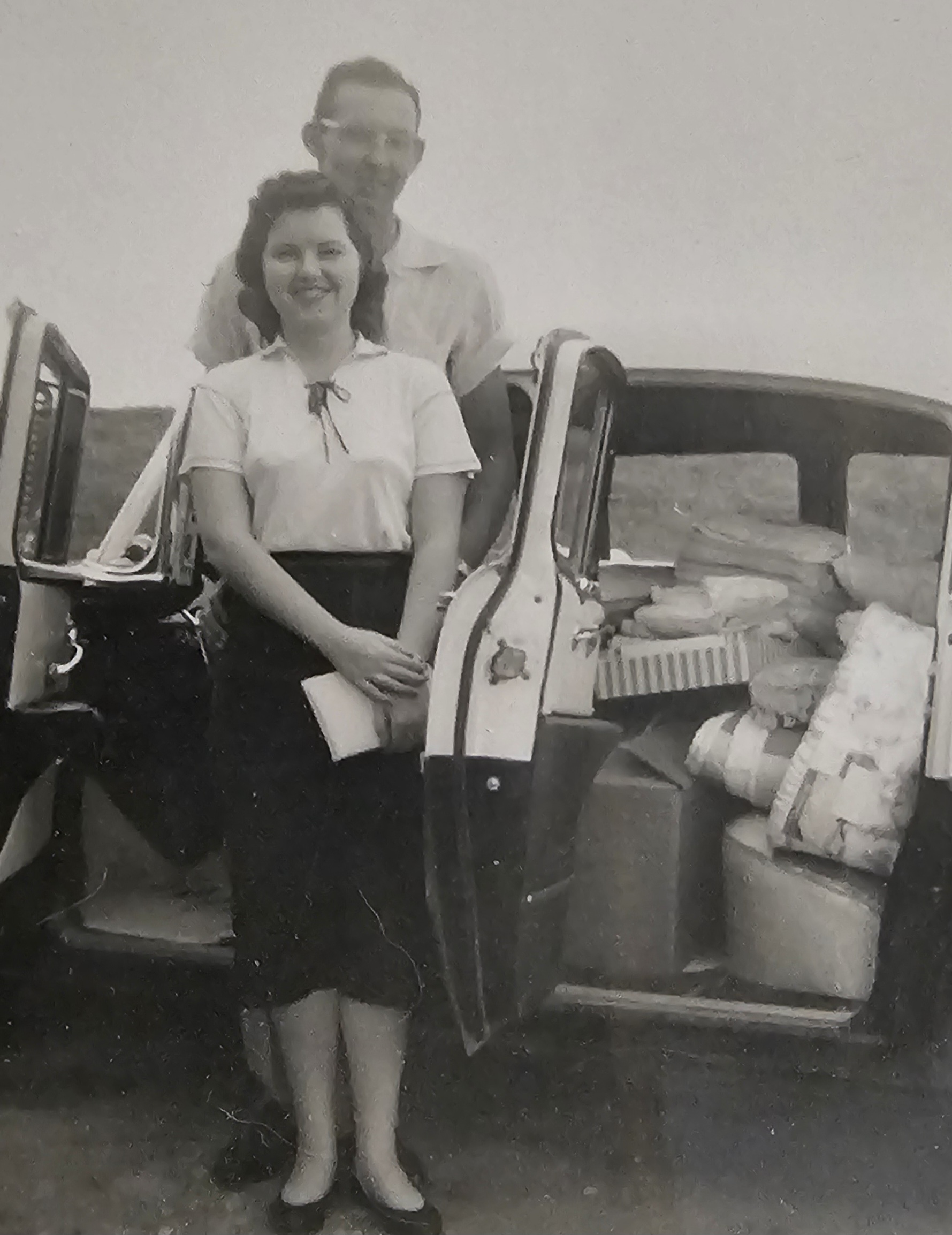
Mary Lea Hart Smith & Tommie Lee Smith
Robert’s son, Elcany Hart, inherited more than a name. He carried the torch of the Hart legacy into Denison, Texas, where his daughter – Mary Lea Hart Smith, my grandmother – would be born.
I was only five years old when my grandmother Mary Lea Smith passed away. She suffered from Melaney’s necrotizing fasciitis and rheumatoid arthritis, two devastating conditions that cut her life short. Because of this, I didn’t grow up with her stories spoken directly into my ear. But even in her absence, her spirit was never absent from our family.
Her daughter – my mother – Mary Lea Miller, carried her name and carried her light. To the Hart family, she was affectionately called “Chick,” a nickname given because she was her mother’s namesake and, as the family put it, “as small and joyful as a little chickadee.” That simple nickname held the essence of legacy – both lineage and love.
My mother, Chick, was the storyteller. The preserver. The one who reminded us where we came from even if we hadn’t seen it for ourselves. Through her, the legacy of the Harts didn’t just live – it sang. In lullabies. In Sunday hymns. In the lessons she handed down to me like heirlooms.
She married my father, Truitt, in Denison, Texas. At the time, my dad wasn’t a churchgoer – he wasn’t even a Christian, though his own mother was. But my mother’s faith never wavered. When we later moved to Palestine, Texas, she made sure my brother and I were in Sunday School and Vacation Bible School. She believed church was essential for raising boys of character.
One Sunday morning, when I was just six years old, I watched my dad walk the aisle at First Baptist Church. With tears in his eyes and conviction in his heart, he gave his life to Christ and followed in believer’s baptism. I’ll never forget that moment – it etched itself into my soul. And just one summer later, during VBS, I made the same life-changing decision.
That’s my mother’s legacy. Quiet, steady, spirit-led. The faith of a woman who lived like John Hart signed – boldly and for generations to come.
Today, as I live, work, and serve in the Pineywoods of East Texas, I carry with me more than a surname – I carry a storyline. A family that rose from colonial fields to revolution, marched through war and westward expansion, and settled in a land as bold and rooted as the Harts themselves.
From Captain Edward Hart’s plea for religious liberty, to John Hart’s signature on the Declaration, from Edward’s march under Washington, to Pleasant’s Civil War sacrifice, and down through the dusty roads of Missouri to the red soil of Texas, our family has shown that leadership isn’t found on the battlefield or the ballot – it’s found at home.
And for me, home is a name. A memory. A little chickadee named Chick. And a legacy worth living for.
Come back tomorrow for Part 3: “Freedom Fought, Faith Kept: How Legacy Led Me to Purpose”