As we approach the end of the 89th Legislative Session, I wanted to take a moment to say thank you to all the folks back home. I could not be more appreciative for all of the communication and input my office received from you all.
Your voice is the most valuable asset I have in Austin, and as long as I have the pleasure to serve as your State Representative, I will always strive to represent you in the most effective and meaningful way possible. I look forward to sharing my post-legislative session report around the district over the coming months.
With that, here’s an update from your State Capitol…
Capitol Update
This week, the House passed another important deadline to pass all Senate Bills out of the lower chamber. The House considered over 800 bills this week, with nearly 250 bills considered on Wednesday alone. The House will now focus solely on negotiations with the Senate on differences the two chambers have on the specifics of multiple pieces of legislation.
Among the bills considered in the House this week was Senate Bill 13. SB 13 seeks to further crack down on profane and sexually explicit books in our public schools. The bill does this by prohibiting schools from purchasing indecent materials, allowing parental access to library catalogs, and creating local school library advisory councils to ensure that library books align with community values.
I was proud to support SB 13 both in the Public Education Committee and on the floor of the House to protect our children from harmful materials and ensure that they are only exposed to age-appropriate materials that serve an educational purpose.
Additionally, the House took up Senate Bill 7 this week. SB 7 represents a historic 10-year, $20 billion investment in Texas’s water supply and infrastructure. The bill stipulates that 50% of the funds dedicated must go to developing new water supplies and the State Water Implementation Fund for Texas (SWIFT).
The remaining 50% of the funds will be invested, at the discretion of the Texas Water Development Board, to invest in building and repairing aging and dilapidated water infrastructure and developing new flood infrastructure. I was also proud to support SB 7 in the Natural Resources Committee and on the House floor to secure Texas’s water supply for generations to come.
The mobile office is on the road again in June and our district director looks forward to seeing you on the following dates, in the following locations: June 4 at the San Augustine County Courthouse from 9:30-11:30 am, June 11 at the Polk County Commissioner’s Court Room in Livingston from 9:30-11:30 am, or at the Tyler County Courthouse in Woodville from 1:30-3:30 pm; June 18 at the Houston County Courthouse Annex in Crockett from 9:30-11:30 am, or at the Trinity County Courthouse in Groveton from 1:30-3:30 pm.
As always, please do not hesitate to contact my office if we can help you in any way. My district office may be reached at (936) 634-2762. Additionally, I welcome you to follow along on my Official Facebook Page, where I will post regular updates on what’s happening in your State Capitol and share information that could be useful to you and your family: https://www.facebook.com/RepTrentAshby/.
The state legislature will adjourn on Tuesday as we reach the 140th day of the legislative session, or Sine Die, which means “without days.” It has been a productive session and I am honored to have once again had the opportunity to represent east and southeast Texas in the Texas Senate!
Here are five things happening around your state:
Major water infrastructure bill passes both chambers
The Texas House and Senate passed legislation to address the state’s water crisis. Our state has faced growing challenges in recent years including water scarcity, and inoperable or damaged infrastructure. Legislators in both chambers have worked tirelessly this session to develop plans to combat this issue. This week, the Senate approved House Joint Resolution 7 by Representative Cody Harris, which is a constitutional amendment that would dedicate $1 billion a year for the next 20 years to secure the state’s water supply. This constitutional amendment will be sent to the voters on the November ballot. Additionally, Senate Bill 7 by Senator Perry passed the House which outlines the framework the Texas Water Development Board can use to fund water projects including the development of water supply infrastructure, fixing leaky pipes, and repairing broken wastewater systems.
Five East Texas BBQ spots names in Texas Monthly top 50
This week Texas Monthly released their annual review of the top BBQ restaurants in the state of Texas. Texas Monthly visited 319 barbeque joints and after rigorous review they compiled the top 50 BBQ joints in the state. Of the top 50, I am proud to say 5 are in my district! Redbird BBQ in Port Neches, 1701 BBQ in Beaumont, Mimsy’s Craft BBQ in Crockett, Brendyn’s BBQ in Nacogdoches, and B4 Barbeque in Mabank, all placed in the top 50. East Texas is full of outstanding BBQ! We also boasted two honorable mentions with Jacksonville’s JW Barbecue, and Dayton’s Weaver’s BBQ. This article is anticipated year round from BBQ lovers across the state. Congratulations to the well-deserving winners!
School accountability bill passes Senate
This week, the Senate passed House Bill 4 by Rep. Buckley which reforms the states existing accountability and assessment system. HB 4 replaces the STAAR exam with an instructionally-aligned assessment model. The STAAR test will be replaced with assessments administered three times per year, which will allow for student progress to be tracked, and for timely diagnostic data to be delivered to teachers and parents. The new model will deliver test results in 24 hours. The bill also stipulates that A-F accountability ratings must be issued annually. It is essential that TEA and the state legislature have access to timely and accurate school accountability data. I am committed to continue working for improvements in public education, and am confident in the reforms that are a part of this bill.
Name, Image, and Likeness bill passes Senate
This week the Senate passed House Bill 126 which will allow colleges to enter into “name, image, and likeness” or NIL agreements with athletes. Currently, only organizations that are separate from universities, such as advertisers or booster clubs, can enter these agreements with athletes. This legislation comes after multiples lawsuits against the NCAA, challenging their restriction on athlete pay. This legislation provides some essential guardrails, while ensuring that college sports in Texas remain competitive for recruiting talent and providing sustainable athletic programs. This bill included stipulations like requiring that an athlete is at least 17 years of age and prohibiting contracts with sexually-oriented business, or alcohol or tobacco companies. Additionally, athletes will be required to take a financial literacy course. This bill is crucial for ensuring the integrity of our college athletic programs. The legislation was developed with the input of coaches and athletic administrations from colleges across the state.
Expansion of Texas Compassionate Use Program passes Senate
This week, the Senate passed a bill expanding the state’s Compassionate Use Program which allows for the use of medical marijuana under specific circumstances. This expansion includes use for chronic pain and Crohn’s disease, and allows for vaporized and aerosol products to be sold by prescription. House Bill 46 by Rep. Ken King allows for the use of cannabis patches, lotions, and prescribed inhalers and vaping devices. The legislature is committed to keeping dangerous and unpredictable products out of the state, while continuing to ensure that Texans have access to safe and regulated products. HB 46 also seeks to increase accessibility to these products by adding satellite locations for approved dispensaries.
As Texas fruit growers battle unpredictable chill hours and late spring freezes, a small, but growing, group is turning to lesser-known or “alternative” fruit crops in search of more resilient and profitable options.
Fruits such as figs, blackberries and raspberries continue to draw interest from niche growers. In East Texas, producers are starting to explore the viability of jujube, golden kiwi, mayhaws, pawpaw and elderberries, said Texas A&M AgriLife Extension Service specialists.
These fruits offer unique opportunities and challenges in Texas’ unpredictable climate.
Jujubes adaptable; pomegranates, tough but tricky
Among nontraditional fruits grown in Texas, jujube remains one of the most overlooked, said Monte Nesbitt, Ph.D., AgriLife Extension horticulture specialist and assistant professor in the Texas A&M Department of Horticultural Sciences, Bryan-College Station.
With Texas fruit growers battling unpredictable chill hours and late spring freezes fruits such as figs, blackberries and raspberries continue to draw interest from niche growers. (Texas A&M AgriLife)
“Jujube adapts well to Texas soils and climate,” Nesbitt said. “It tolerates drought, handles the heat and thrives in poor soil conditions.”
Despite its hardiness, commercial production remains limited. It’s not an easy plant to work with, being a large-sized and moderately thorny fruit that’s prone to sucker and overgrow an area, Nesbitt said.
More variety testing and reducing the suckering problem could help jujube gain a foothold in Texas fruit production, he added.
Like jujube, pomegranates can endure Texas’ tough conditions, but they remain a niche crop due to cultivation challenges and inconsistent yields, Nesbitt said.
“Pomegranates are fine as a dooryard specimen plant, but they aren’t consistently viable for commercial growers,” he said. “Low fruit set, poor freeze survival and fruit disease susceptibility remain major hurdles.”
Figs are reliable in Central Texas and raspberries a surprise
In Central Texas, figs continue to thrive, said Larry Stein, Ph.D., AgriLife Extension horticulture specialist and professor in the Texas A&M Department of Horticultural Sciences, Uvalde.
Varieties such as Alma, Celeste and Texas Everbearing perform well in the region.
“Figs have always been among Texas’ more forgiving fruits,” Stein said. “They can handle the heat, require minimal chill and recover well from extreme weather.”
Raspberries may be the most unexpected addition to Texas’ list of alternative fruits. Long considered too delicate for the state’s heat, raspberries are now under evaluation at the Texas A&M AgriLife Viticulture and Fruit Lab in Fredericksburg, where the emphasis has been on variety comparison and use of colored shade fabrics.
“For the first time, we’re seeing real potential for raspberries becoming a viable crop in Texas,” Nesbitt said. “These experimental yields and fruit quality look good, and the growers are highly intrigued.”
High tunnels promising but pricey
Protected growing methods such as seasonal high tunnels and greenhouses offer new hope for expanding fruit production across Texas.
“We’ve seen growers consistently harvest peaches in North Central Texas using high tunnels,” Nesbitt said. “That same approach could benefit crops like strawberries, apricots, blackberries and raspberries where the winter-spring weather transition brings high risk for crop loss from frost and freeze.”
Still, high tunnels come with high up-front costs and their own temperature and pest challenges.
“They aren’t a silver bullet,” he said. “Wind, warm temperature spikes at the wrong time, and static, moderate environment that favors pests like mites and thrips create additional management burdens that should be considered.”
Water is always key
Regardless of the type of fruit, success ultimately depends on access to water.
“Texas horticulture begins and ends with water,” Nesbitt said. “Growers need at least an inch of water per week per acre — sometimes more.”
Alternative fruits won’t replace staples like peaches or blackberries anytime soon. But for growers facing climate uncertainty or exploring niche markets, crops such as jujube, fig and raspberry may offer valuable options.
“These crops won’t succeed everywhere,” Stein said. “But in the right places, with the right strategies, they can add real value.”
AgriLife Extension district reporters compiled the following summaries:
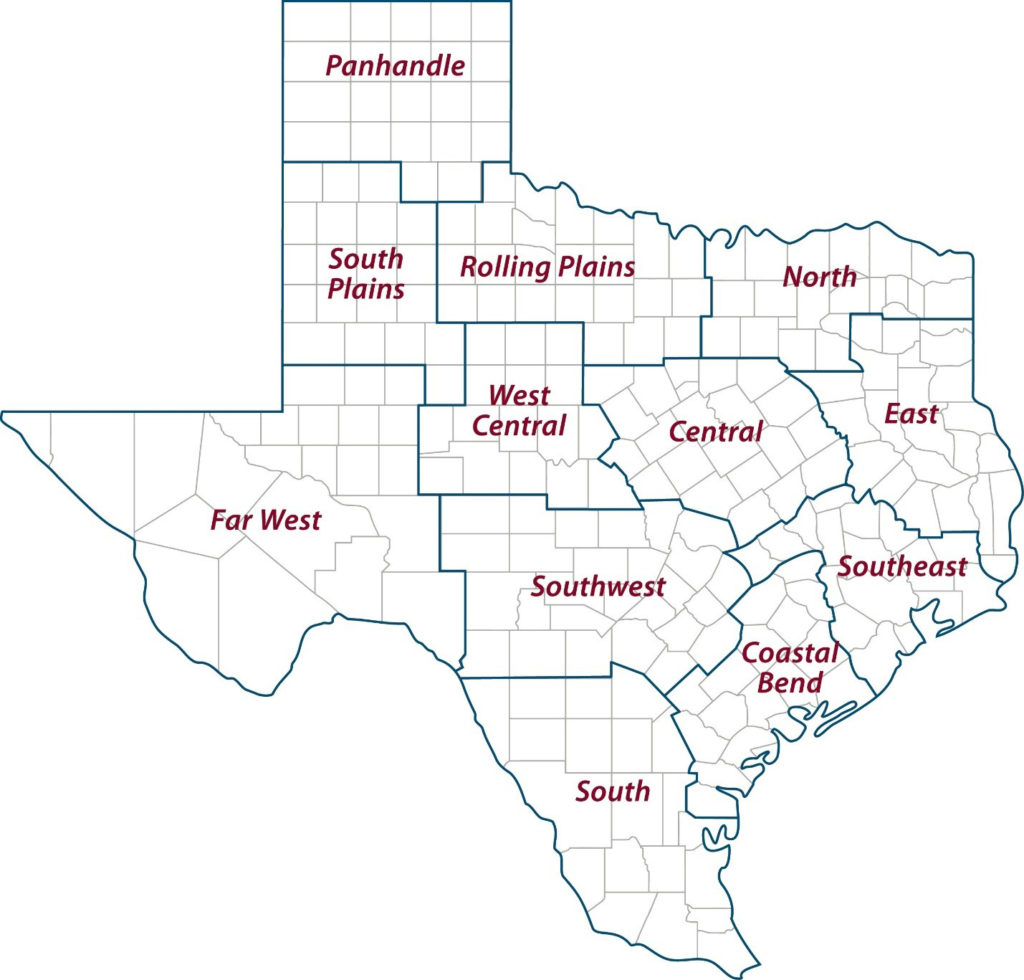
map of the 12 Texas A&M AgriLife Extension Service districts.
Far West Texas
The district endured a stretch of hot, dry and windy conditions, with highs reaching the upper 90s and 100s. Planting moisture continued to decline, even in irrigated fields. Cotton planting began and was expected to accelerate as end-of-month deadlines approach. Corn and sorghum continued to grow, but excessive heat threatened their development, especially as they begin to flower. Pastures were struggling, with most grass already depleted. Green growth has slowed, and weed populations were thinning. Some mesquite beans started to appear, but signs of moth and worm infestations may impact production — an issue with both risks and benefits. Producers harvested wheat for seed and hay, planted haygrazer and continue feeding livestock and wildlife as rangeland conditions remain strained.
North
Conditions dried out briefly before weekend storms dropped about 2-5 inches of rain in some areas, accompanied by strong winds. Winter wheat was nearing harvest. Corn continued to perform well, although excessive moisture caused a decline in quality in some fields. With a solid spring for grazing, producers were optimistic headed into June. Topsoil and subsoil moisture levels ranged from adequate to surplus throughout the district. Winter wheat was in fair to good condition. The rain further boosted pasture and pond conditions. Gardens remained in good shape, and the forecast called for warmer, drier weather ahead. Nuisance flies were present in high numbers, and mosquito populations increased rapidly due to the presence of standing water. Pastures remained in excellent shape, and livestock were in strong condition.
Central
The district experienced a mix of weather conditions this past week. Some areas received 1.5-3 inches of much-needed rain, while others remained dry with above-normal temperatures. The first hay harvest progressed. Crop conditions remain mostly positive. Corn performed well and has begun to tassel in many areas. Grain sorghum was thriving, cotton was emerging nicely where planted, and peanuts showed vigorous growth. Thrips activity was minimal. Wheat and oat harvests continued steadily, though yields were expected to vary widely — from 20 to 70 bushels per acre, with some fields producing shorter crops due to weather stress. Despite the uneven moisture, pastures and rangeland generally stayed green and in good condition, though signs of stress have emerged in drier areas. Livestock remained in good condition. Market prices were strong, especially for lightweight calves and packer cows. Stocker cattle were moved off winter forage pastures. Producers in drier zones continued supplemental feeding.
West Central
Storms moved through the district, bringing 2-6 inches of rain to most areas and causing wind damage in some locations. Scattered showers improved corn. The rainfall filled tanks and replenished topsoil. Earlier green conditions began browning. The wheat harvest was underway, though rainfall delayed progress in some areas. Yields ranged from 35 to 50 bushels per acre, with good test weights reported. Irrigated cotton was planted and emerged. Grain sorghum performed moderately well following recent rains. Haygrazer fields were off to a strong start. Weed pressure remained high, prompting producers to focus on herbicide applications. Pasture forages started to suffer from a lack of rainfall, but recent showers brought slight improvement. Rangeland and livestock conditions were expected to improve with additional moisture. Spring cattle work wound down. Some ranchers were marketing fall-born calves earlier and at lighter weights due to limited forage and moisture shortages heading into summer.
Southwest
Hot, dry and windy conditions continued to worsen drought across the district. Temperatures continued to run above average, with highs ranging from the mid-90s to 100 degrees and morning lows in the low 70s. Some areas received no precipitation, while others reported up to 1 inch. In Gillespie County, a key peach-growing region, large hail fell overnight. It is too early to assess the extent of the damage. Some corn fields were zeroed out and converted to hay. However, other fields performed well, with plants reaching approximately 5 feet tall. Irrigated crops continued to thrive despite the heat. Oat crops that were grazed earlier in the season have since matured. Grasshopper nymphs emerged in pastures and rangelands, and insect pest pressure was expected to increase Livestock continued to be supplemented with additional forages. White-tailed deer and birds remained active. Livestock markets remained high, and overall livestock conditions were fair.
Panhandle
The warmer weather across the district has winter wheat progressing nicely. Overall crops were reported fair to good. Corn and cotton looked good. The first cutting of alfalfa was 95% complete. Wheatlage was rapidly being harvested. Sorghum planting will begin in the next few weeks. Rangeland improved daily due to rain and temperatures. Overall soil moisture was reported short to adequate. Pasture and range conditions were reported from fair to good.
Rolling Plains
Farmers and ranchers in the Rolling Plains continued to benefit from recent rainfall. While most of last week was warm and dry, isolated pop-up storms brought localized damage to wheat fields in parts of the district. Livestock thrived on improved pastures, and cattle prices remained high, supporting producers. In some areas, fields still need time to dry out before equipment can be used, but the wheat harvest has begun sporadically across most counties.
Coastal Bend
High temperatures, windy conditions and little rain caused the amount of topsoil moisture to decline and some of the crops to show a little stress. Some parts of the reporting area received much needed rain. Some areas received at least 1 inch of rain. Corn was irrigated and cotton did well with the sunny, warm days and residual soil moisture in clay soils. Grain sorghum crops showed stress due to lack of rainfall at the emergence of seedheads. There were reports of insect issues with grain sorghum and cotton, but they were controlled. Herbicide applications were made to pastures as wind allowed. Some fertilizer was applied in anticipation of rain. Pastures provided enough forage for cattle. Haying started on a larger basis and will continue unless conditions change due to moisture. Range and pasture conditions remained good with livestock gaining flesh.
South
High temperatures and windy conditions set back soil moisture conditions in most parts of the district, but some showers left scattered rainfall in some areas. Row crop conditions varied from fair to excellent depending on planting dates and rainfall received. Many hay producers were baling hay. Producers harvested wheat across the county. Strawberry harvesting wrapped up. Onion harvesting began in certain parts of the county and should conclude soon. Citrus trees did well with juvenile fruit continuing the maturation process. Cotton crops emerged under irrigation but need rainfall in the next two weeks and peanut planting will soon be completed. Grain sorghum and corn showed signs of heat stress in the afternoon. Forage crops were in the same condition but should make the first cutting soon. Pastures that did not have several days of standing water due to last month’s flood did well. Range conditions improved. Supplementation of beef herds decreased as grass yields improved, and cattle were in good body condition. Some ranchers sold higher numbers than normal due to dry conditions and high prices.
Southeast
Some areas benefited from recent rainfall and moderate temperatures, while others faced challenges due to dry weather. Rice conditions decreased due to dry weather caused by early flooding of fields and drowning the young rice on one end while other fields did not receive enough water. Many producers were harvesting hay, as fields dried enough for equipment access. While some counties hoped for more rainfall to sustain pasture and crop health, others used the dry spell to fertilize or spray fields in preparation for the coming weeks. Soil moisture levels ranged from very short to adequate. Oats were progressing and wheat harvest was underway. Corn, rice, sorghum and soybeans were all planted and emerged. Livestock generally remained in fair to good conditions.
South Plains
Some portions of the area received rain, hail and high winds because of thunderstorms over the weekend. Subsoil and topsoil moisture levels returned to fair in areas that had no recent rainfall and experienced high heat over the last two weeks. Residual herbicides in dry ground lost efficacy and weeds were beginning to break through. Most farmers were waiting to plant cotton closer to the June 5 deadline in anticipation of additional moisture. All wheat was cut for hay or was being grazed. Silage was being chopped and hay swathed. Cucumber planting began and seed wheat was drying down. Some cotton seed quality issues were reported. Producers were planning to plant summer forages. The hot and windy conditions dried out pasture grasses and fields, but cattle were in good condition and some were being shipped.
The screwworm, a pest likely remembered only by our grandparents, is making headlines again. With a proper name of New World Screwworm and scientifically known as Cochliomyia hominivorax, this is an incredibly destructive fly that is appearing in places that it had been eliminated.
The New World Screwworm (also referred to as NWS) is native to the Americas. Historically, it was found from the southeastern United States through Mexico, Central America, and into South America. This parasitic insect thrives in warm climates and was once a common problem across this region. It’s high reproductive rate and ability to infest diverse hosts make it very dangerous. Screwworms primarily affect livestock (including cattle, horses, sheep, goats), wildlife, and occasionally humans.
The NWS is an ordinary-looking fly that lays its eggs in the wounds or moist tissues of animals. Unlike most fly maggots that consume decomposing tissue, screwworm larvae feed on living tissue, often leading to death in their hosts.
Myiasis refers to the infestation of living tissue by fly larvae. First, a female screwworm fly lays her eggs on an open wound or a moist body opening (like the nose or ears). The eggs hatch into larvae within a day. Next, the maggots burrow into the tissue, feeding on living flesh instead of only decaying tissue as most other maggots.
Without treatment, myiasis caused by screwworms leads to severe pain, swelling, infection, and often death. The wound enlarges, and infections are likely as the larvae consume tissue. This secondary infection allows bacteria to enter the wounds, worsening the damage.
While they are native in the southern US and were historically found throughout the Americas, we have kept them contained in the last several years to parts of the Caribbean and South America. But earlier this year in 2025, they were found in Southern Mexico.
Preventative efforts for livestock included insect repellants and screened enclosures to prevent infestations. These were difficult and time consuming. On affected livestock, ranchers applied insecticidal powders or sprays directly to infested wounds to kill the larvae. Additionally, stockmen often manually removed maggots from the wounds of their animals’ using forceps, a time-consuming and labor-intensive process.
Deer, particularly white-tailed deer in the U.S., were frequent victims. Infestations often occurred in wounds caused by fights or during the shedding of antlers. Screwworm infestations had devastating effects on white-tailed deer, with reports indicating up to 80% death rates in newborn fawns in some areas.
Humans were treated similarly to livestock. Maggots were manually extracted from wounds. Medical staff applied antiseptics and larvicidal ointments wounds to kill larvae and prevent secondary infections. In advanced cases, surgery was required to remove deeply embedded maggots and repair tissue damage.
Eradication efforts in the 1950s led to the development of the Sterile Insect Technique (SIT). Entomologists Edward Knipling and Raymond Bushland began developing the SIT at a USDA research station in Menard, Texas. SIT involves raising and sterilizing male flies using radiation. Sterile males, when released, mated with wild females, resulting in no offspring and a sharp population decline.
Implementation was in full swing by 1960 in Texas and most southwestern states using SIT. A very large facility in Mission, Texas, was established to produce approximately 200 million sterile flies each week!
The results of releasing the sterile male flies were hugely successful. It was a cost-effective method that was specific to only the targeted species, and sustainable. Sterile males were transported in planes equipped with automated release systems that dispersed the flies over targeted areas. This method allowed for coverage of vast, remote regions. Releases occurred weekly or bi-weekly, maintaining a steady presence of sterile males to outcompete wild males for mates.
Texas was declared free of NWS in 1964 and the entire US was declared free in 1966. The elimination of screwworms resulted in substantial economic savings for the livestock industry. Deer populations experienced significant rebounds. In Texas, the white-tailed deer population more than tripled compared to 1960 levels.
Ongoing efforts through the years had pushed them south to a permanent, barrier zone in Panama where control efforts still occur. However, late in 2024 the NWS was detected outside the barrier in southern Mexico.
By March of 2025, there were 369 confirmed cases, including six infected people, reported in the Mexican states of Oaxaca and Veracruz. As a result, in May of 2025, the USDA suspended imports of live cattle, horses, and bison from Mexico to help prevent entry into the US.
It should be noted that the USDA is investing $21 million to renovate a facility in Metapa, Mexico, which will then be able to produce 60–100 million sterile NWS flies weekly. These sterile male flies are being strategically released in affected areas to suppress wild populations.
In response to the increased public concern for this terrible pest, a webinar hosted by the Texas A&M AgriLife Extension Service will examine and help educate agricultural producers and the public about the New World screwworm.
This free webinar will cover the biology of the pest, prevention and treatment strategies, public health perspectives including pets, importance of New World screwworm awareness and prevention, current status, government response and surveillance programs as well as a question-and-answer session. To register, visit http://tx.ag/NWSwebinar.
Additionally, the Texas A&M AgriLife Extension Service in Angelina County is hosting a viewing of the webinar on Monday, June 9 starting at 2 pm. Attending this meeting in person will give producers 2 CEU credits towards their pesticide license. This will be a live, zoom meeting hosted from 2:00 – 4:30 PM at the Angelina County Extension office. The Angelian County Extension office is located at 2201 S. Medford Dr., Lufkin, Texas.
Veteran of Region XIV Boasts Impressive Career Results
Addie Lees spent a few years strolling the sidelines of countless Region XIV women’s basketball games. Then the head coach at Kilgore College, Lees built quite a resume before taking on roles at other levels, including her most recent tenure at the NCAA level. At Kilgore, Lees ran the Rangers to three 20-win seasons and a national ranking – all in a league known for being one of the best conferences in the entire nation.
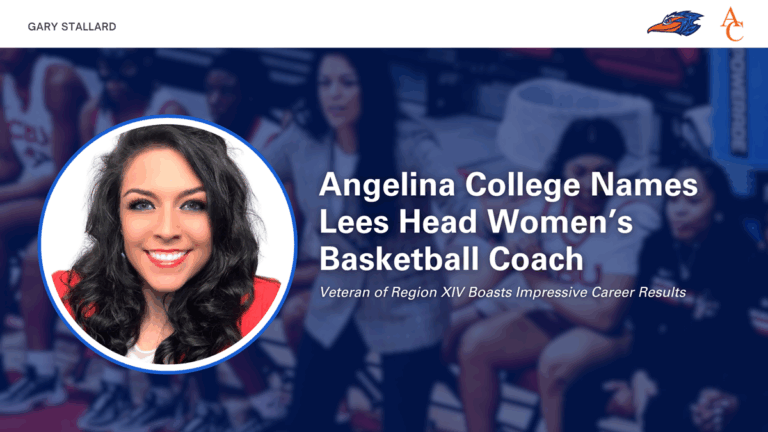
Angelina College has named Addie Lees the new head women’s basketball coach at Angelina College. Lees brings a track record of athletic and academic success in Region XIV, having coached in the league for several years. (Contributed photo)
So yes, she’s all-too-familiar with the level of competition at this level – and she said she can’t wait to get reacquainted with those battles.
Lees on Thursday was named the head coach for the Angelina College women’s basketball team, and she’s ready to get the ball rolling inside Shands Gymnasium.
“I’m a competitor, and Region XIV produces phenomenal student-athletes year after year,” Lees said of her decision to return to Region XIV. “This league has exceptional coaches, and when this opportunity arose, I just thought, ‘Why not be a part of that again?’”
Adding to her desire to return to East Texas was the impression AC athletics and the administration made on her, not just recently, but over the past few years.
“It’s the people here,” Lees said. “I believe in influence and positive impact, and I want to be a part of something special.
“Angelina College is trending upward,” Lees noted. “They’ve got people in place to help everyone succeed, and there’s something there for everyone. To me, all that aligns with my own vision.”
All our life experiences build who we are, Lees said, whether those experiences were positive, negative or whatever. Looking back on her previous stint in Region XIV, Lees said she can directly attribute her later successes to the challenges this league offered her.
Addie Lees, shown here coaching at Christian Brothers University, has been named head women’s basketball coach at Angelina College. Lees brings a track record of athletic and academic success in Region XIV, having coached in the league for several years. (Contributed photo)
“I definitely learned to take risks and develop my craft,” Lees said. “I can recall many times being in recruiting battles with different schools in Region XIV – winning and losing some of those battles. I can also remember being in the tournament, and that helped me grow. Preparation is key, right? I’ve gotten an opportunity at Arkansas State University -Midsouth and won a (conference tournament) championship there. Without those earlier experiences and those battles, I don’t believe I’d have ever won a championship.
“I learned if I wanted to accomplish those things, I’d need to be in places that would allow me to do so. I’m so thankful for a great school and community.”
Following her successes at Kilgore College, Lees moved on to ASU-Midsouth. There, despite mere days of recruiting time, Lees put together a team that won the NJCAA Region 2 Tournament title while finishing the year with a 19-11 record.
That same team boasted three Academic All-Americans and was named the NJCAA Academic Team of the Year, posting a 3.19 cumulative GPA. Her teams also have boasted a 100 percent graduation rate, a factor Lees said she emphasizes from the very first meeting with a player. From Day One, Lees said, she establishes the importance of “setting benchmarks and reaching our goals,” all while emphasizing a focus on the complete future, and not just the immediate one.
“First and foremost, I want them to understand all of this is going to be transformational,” Lees said. “In order to do that, I’m going to meet them where they are and value the person, the student and then the athlete – in that order.
“I want them to know we’re going to go through highs and lows, and we’re going to experience success and failure. But at the end of the day, the growth is what we’re after, and I’m going to be there from the start all the way to the finish.”
Lees, a Plainview, Texas native (her high school team won back-to-back state titles) said some of her biggest focus is preparing her student-athletes for what happens after the very last whistle. She’s ready to “hold their feet to the fire” while also serving as “a positive light.”
“One day, the ball is going to go flat,” Lees said. “My goal is to make sure players are able to stand on their own two feet, and in order for that to happen, they need to walk away from college with a piece of paper. I’m going to motivate them some days, and some days they’ll think I’m being tough on them. But at the end of the day, if they walk away with a degree, then we’ve done our part, and we’ve done our job.
“This is all full-circle for me,” Lee added. “This is something Angelina College offers every student, and not just the athletes. We want academic success to be the ceiling all students are trying to reach. That’s what I want to be a part of.”
The email address for Angelina College’s Sports Information Director is gstallard@angelina.edu.
Success doesn’t happen by accident—and neither does godly leadership. In a culture that often prioritizes busyness over purpose, faith-driven leaders are called to something higher: intentionality. It’s about making deliberate choices that reflect your values, honor your faith, and lead others toward lasting impact.
In Entrepreneurship God’s Way, I talk about how intentional living requires more than just discipline. It means waking up each day with a clear purpose anchored in your calling and mission from God.
Why Intentionality Matters
The difference between good leadership and great leadership is often intentionality. Proverbs 21:5 says:
“The plans of the diligent lead to profit as surely as haste leads to poverty.”
Intentional leaders aren’t reactive; they’re proactive. They don’t just move fast—they move on purpose.
What Intentional Leadership Looks Like
Clarity Over Chaos Intentional leaders start with vision. They define where they’re going and why it matters. Every decision flows from that mission.
Values Over Convenience When choices are tough, intentional leaders stay true to biblical values. They choose what’s right over what’s easy.
Time with God Over Distraction Intentionality starts with connection. Faith-driven leaders prioritize prayer, Scripture, and spiritual clarity in their schedule.
Investment Over Activity Busy doesn’t always mean productive. Intentional leaders invest their energy into people, projects, and practices that align with their God-given purpose.
How to Become a More Intentional Leader
Start Your Week with a Plan Don’t just react to whatever shows up. Set your priorities in prayer and plan your schedule around what matters most.
Revisit Your Why When things get off track, ask: “Why am I doing this? Who is this serving? Does this align with my calling?”
Put God First, Daily Even five minutes in the Word or prayer before your day starts can reset your direction and invite God to lead.
Be Present on Purpose Whether you’re in a meeting, mentoring, or managing—show up fully. Great leaders lead in the moment, not just on the calendar.
Final Thoughts: Lead With Purpose, Not Pressure
Intentional leadership doesn’t mean having all the answers—it means having the right focus. It’s choosing to live and lead each day in a way that honors God, serves people, and builds eternal impact.
Ask yourself: Are you just managing the moment—or are you building the mission?
For many businesses, downtime isn’t just frustrating—it’s expensive. Whether it’s a crashed server, a sluggish Wi-Fi connection, or a network glitch that stalls an entire operation, the ripple effects are real. And while these problems might seem unpredictable, most are preventable.
That’s the hard lesson one regional retailer learned when their weekend sales were consistently undercut by unexplained IT failures.
The Slow Burn Before the Crash
It started small. Customers at the checkout line had to wait as card readers lagged or failed. By the third Friday in a row, it wasn’t just an inconvenience—it was a crisis. The retailer reached out to Castleberry Services, desperate to keep the next weekend on track.
Our technicians discovered the cause wasn’t faulty hardware or software—it was a power fluctuation in the server rack that overloaded the network during peak hours. The fix? Strategic surge protection, network optimization, and smarter monitoring tools.
Sales bounced back the very next weekend.
The Bigger Picture: Downtime is Preventable
Downtime is more than a tech issue. It’s a lost sale. A missed deadline. A customer who might not return. Smart businesses are realizing that proactive IT planning is a vital part of their growth strategy.
Some of the best practices we’ve seen include:
✔ Real-time monitoring – Catching problems before they crash systems. ✔ Failover systems and backups – Staying operational even when the unexpected happens. ✔ Simplified vendor relationships – Reducing delays by having one point of contact. ✔ Routine maintenance – Ensuring every update or upgrade works as it should.
East Texas Businesses Deserve Better
From retail to healthcare to logistics, local businesses power our region. And they need technology that works as hard as they do.
Because in business, every minute really does count.
When Every Minute Counts: How Smart Businesses Avoid IT Downtime
By Alec Castleberry
For many businesses, downtime isn’t just frustrating—it’s expensive. Whether it’s a crashed server, a sluggish Wi-Fi connection, or a network glitch that stalls an entire operation, the ripple effects are real. And while these problems might seem unpredictable, most are preventable.
That’s the hard lesson one regional retailer learned when their weekend sales were consistently undercut by unexplained IT failures.
The Slow Burn Before the Crash
It started small. Customers at the checkout line had to wait as card readers lagged or failed. By the third Friday in a row, it wasn’t just an inconvenience—it was a crisis. The retailer reached out to Castleberry Services, desperate to keep the next weekend on track.
Our technicians discovered the cause wasn’t faulty hardware or software—it was a power fluctuation in the server rack that overloaded the network during peak hours. The fix? Strategic surge protection, network optimization, and smarter monitoring tools.
Sales bounced back the very next weekend.
The Bigger Picture: Downtime is Preventable
Downtime is more than a tech issue. It’s a lost sale. A missed deadline. A customer who might not return. Smart businesses are realizing that proactive IT planning is a vital part of their growth strategy.
Some of the best practices we’ve seen include:
✔ Real-time monitoring – Catching problems before they crash systems. ✔ Failover systems and backups – Staying operational even when the unexpected happens. ✔ Simplified vendor relationships – Reducing delays by having one point of contact. ✔ Routine maintenance – Ensuring every update or upgrade works as it should.
East Texas Businesses Deserve Better
From retail to healthcare to logistics, local businesses power our region. And they need technology that works as hard as they do.
Because in business, every minute really does count.
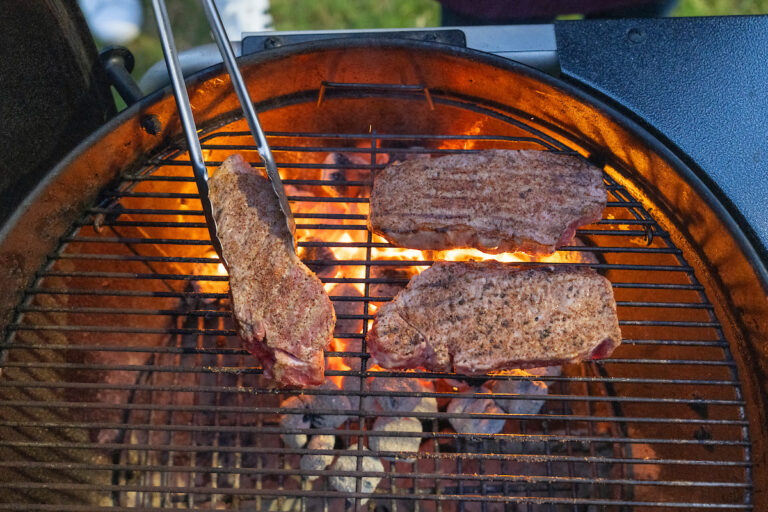
The Texas A&M Forest Service advises everyone to take extra care when grilling over the Memorial Day weekend (Michael Miller/Texas A&M AgriLife)
Recent high temperatures and reduced rainfall are causing wilting grasses and dry vegetation in areas where small wildfires could occur across parts of the eastern Hill Country, South Texas, Central Texas, and Southeast Texas. In the Trans Pecos region, ongoing drought and dry, dormant vegetation in the mountain ranges continue to pose a wildfire risk.
“Late April and early May rainfall has spurred grass growth and improved vegetation moisture across much of the state,” said Luke Kanclerz, Texas A&M Forest Service Predictive Services department head. “We do not anticipate any large wildfires occurring through the holiday weekend, but encourage everyone to be cautious with outdoor activities that may cause a spark.”
Tips to help prevent wildfires
Keep the following tips in mind to help prevent wildfires this summer:
Always check with local officials for burn bans and other outdoor burning restrictions. Pay attention to local guidelines regarding open fires, campfires, and outdoor activities that may pose a fire hazard.
Never leave your grill unattended. Wind gusts may blow embers into dry vegetation, potentially starting a wildfire.
Ensure your grill is kept clean of excess grease to prevent flare-ups.
Place your grill in an open space away from tall or dry grass, shrubs, wood piles or other flammable materials. Also, avoid placing your grill underneath a tree or on a wooden patio deck.
After grilling, allow time for the coals to completely cool. Smoldering coals may reignite and release embers, which may be blown into nearby vegetation.
If you pull a boat or camper, ensure the tow chains are correctly connected and not dragging on the roadway, creating sparks.
Park in designated spaces and avoid driving over and parking on dry grass — the heat from your vehicle can easily ignite the grass.
Davila, Ficarra Named to First Team Superlatives Lists
Angelina College softball and baseball players earned postseason honors following the recent 2025 season, with a total of five Lady Roadrunners and Roadrunners landing on Region XIV superlatives lists.
Softball’s Riley Davila and baseball’s Connor Ficarra each earned 1st Team honors, while Lady ‘Runner River Hulsey and Roadrunner Stefano Ramos picked up 2nd Team honors. Baseball’s Ashton Wagner earned Honorable Mention on the list.
Davila, a sophomore outfielder from Angleton High School in Angleton, earned 1st Team All-South Conference and 2nd Team All-Region for the Lady Roadrunners. Davila leaves the program as the all-time leader in stolen bases, both for a season (43) and a career (78). Her ’25 total left her ranked among the top 25 in the nation in stolen bases. Davila also hit for a .418 batting average while scoring 42 runs.
Ficarra, a sophomore outfielder from Cinco Ranch High School in Katy, hit at a .339 clip while driving in 30 runs and scoring 41 more. Ficarra finished the year with a pair of homers, three triples and 13 doubles.
Sophomore Hulsey, from Longview High School in Longview, hit .351 with a homer and 24 RBI while locking down the catching position for the Lady ‘Runners. Hulsey also spent time at first and third base over her two-year career.
Freshman Ramos from Trujillo, Venezuela, attended Fulshear High School. Ramos batted .358 – compiling a slugging percentage of .519 – with three homers and 18 RBI while also scoring 23 runs.
Wagner, a sophomore catcher from Central Heights High School in Nacogdoches, batted .333 with a homer and 20 RBI while slugging at a .462 clip. Wagner also posted a solid .993 fielding percentage from his spot behind the plate.
Helping Texas Forest Country Businesses Grow Stronger
Marketing can be tricky, especially for small businesses in East Texas. It’s easy to fall into habits that end up costing you customers—and you may not even realize it’s happening! Here’s how to spot and fix some of the most common marketing mistakes local businesses make.
5 Marketing Mistakes to Watch Out For
1. Your Message Isn’t Clear
If folks can’t quickly understand who you are and what you offer, they’ll move on.
Local Tip: Keep your messaging simple, friendly, and consistent—from your business card to your Facebook page.
2. You’re Not Engaging with Customers
Talking at your customers isn’t the same as talking with them.
Local Tip: Reply to comments, thank customers publicly, and create posts that invite conversation.
3. You’re Trying to Talk to Everyone
When you try to appeal to everybody, your message often connects with nobody.
Local Tip: Focus your marketing on the folks who truly need what you offer.
4. You’re Skipping Out on Advertising
Relying only on word-of-mouth or organic posts can limit your growth.
Local Tip: Even a small monthly budget on Facebook or Google ads can help you reach new local customers.
5. You’re Not Tracking What Works
If you don’t know what’s working, you can’t do more of it!
Local Tip: Keep an eye on your website visits, social media stats, and ad results to see what gets the best response.
Helping Your Business Grow the Right Way
At Texas Forest Country Living, we’re passionate about helping small businesses succeed. By avoiding these common mistakes, you can turn your marketing into one of your strongest tools for growth.
Need a little extra help? Reach out to us—we’d love to help you shine brighter in the Pineywoods!